Updated on June 24, 2026


How to Immigrate to Canada: Your Complete 2026 Roadmap to become a Permanent Resident of Canada
Whether you’re a skilled worker, a business owner, or someone hoping to reunite with family members already in Canada, this article gathers multiple programs and pathways, general eligibility requirements, costs, timelines, and step-by-step processes you need to select the best path for you and your family.
How to Immigrate to Canada
The first step is understanding the different pathways available. Canada offers several immigration programs tailored to your goals—whether you’re planning to live, work, or study here.
These are the three main categories to explore:
1. Permanent Residence (PR)
This is the most common route for long-term immigration. It includes:
- Economic immigration programs like Express Entry, which targets skilled workers.
- Family sponsorship, allowing Canadian citizens and permanent residents to sponsor relatives.
- Provincial Nominee Programs (PNPs), which let provinces and territories nominate individuals based on local labor needs.
2. Working in Canada – Work Permits
These programs allow you to work in Canada temporarily. Some work permits are employer-specific, while others are open, giving you more flexibility. Gaining Canadian work experience can also help you qualify for permanent residence later.
3. Studying in Canada – Study Permits
If you’re planning to study in Canada, a study permit allows you to attend a designated learning institution (DLI). Many international students can work during their studies and may be eligible to apply for permanent residence after graduation by obtaining a Post-Graduation Work Permit (PGWP).
Which path is right for you?
It depends on the path that best suits your situation and the eligibility requirements that align with your profile.
Let’s take a closer look at the main categories for immigrating to Canada.

1. Permanent Residence (PR) Paths
Obtaining permanent residence is the most common goal for people looking to build a life in Canada long-term. A PR holder can live and work anywhere in Canada, access most public services, and eventually apply for citizenship, without being tied to a specific employer or province.
The Canadian immigration system offers three main routes to permanent residence, broadly grouped into three categories:
Economic programs
Are the largest pathway and are designed for skilled workers, entrepreneurs, and international graduates who can contribute to Canada’s economy. Most economic programs use a points-based assessment that weighs factors like age, education, language ability, and work experience. There are also dedicated pathways for investors, entrepreneurs, and self-employed individuals looking to contribute to Canada’s economy in other ways.
- Express Entry: A competitive system that manages applications for three federal programs and regularly invites the highest-scoring candidates to apply.
- Provincial Nominee Program (PNP): Provinces and territories run their own streams through the Provincial Nominee Program (PNP), allowing them to select candidates based on local labour market needs, making it a strong option if you have ties to a specific region or skills that are in demand locally.
- Atlantic Immigration Program (AIP)
- Rural and Northern Immigration Pilot (RNIP)
- Start-Up Visa Program
- Self-Employed Persons Program
Family sponsorship
Allows Canadian citizens and permanent residents to sponsor close relatives to become permanent residents. The most common sponsorships are for spouses, common-law partners, and dependent children, these applications are generally processed as a priority. Beyond immediate family, parents and grandparents can also be sponsored through the Parents and Grandparents Program (PGP), though this stream is more competitive, opens on a limited basis each year, and typically requires sponsors to meet a higher income threshold. Canada also allows sponsorship of other eligible relatives in specific circumstances, such as when a sponsor has no other close family in Canada.
- Spouse, Common-Law Partner & Conjugal Partner Sponsorship
- Dependent Child Sponsorship
- Parents and Grandparents Program (PGP)
- Super Visa (long-term visitor option for parents/grandparents)
- Other Eligible Relatives Sponsorship
Humanitarian pathways
exist for people who cannot safely return to their home country, as well as those facing exceptional circumstances. Canada has one of the largest refugee resettlement programs in the world and offers protection through both government-led and community-driven streams. Beyond refugee protection, Canada also has mechanisms for people already in the country who face hardship or compelling circumstances that make them eligible to stay on humanitarian and compassionate grounds.
- Government-Assisted Refugees (GAR)
- Privately Sponsored Refugees (PSR)
- Blended Visa Office-Referred Program (BVOR)
- Refugee Claimants (In-Canada Asylum)
- Humanitarian and Compassionate (H&C) Applications

Rebecca Major
2. Working in Canada – Work Permits
Before obtaining permanent residence, many people come to Canada on a work permit. A work permit allows foreign nationals to work legally in Canada for a set period of time and, in many cases, serves as a stepping stone toward permanent residence by helping applicants build Canadian work experience.
Work permits in Canada fall into two main categories: employer-specific (also called “closed”) permits, which tie you to a specific employer and role, and open work permits, which allow you to work for almost any employer in Canada.
Employer-Specific Work Permits
Are tied to a particular employer, position, and sometimes location. In most cases, the employer must obtain a Labour Market Impact Assessment (LMIA) to demonstrate that no Canadian worker was available for the role before hiring a foreign national. Some employer-specific permits are LMIA-exempt under international agreements or specific programs.
- Temporary Foreign Worker Program (TFWP)
- High-Wage Workers
- Low-Wage Workers
- Agricultural Stream
- Seasonal Agricultural Worker Program (SAWP)
- Intra-Company Transfers
- International Agreements (e.g. CUSMA/USMCA, CETA)
Open Work Permits
Allow you to work for almost any employer in Canada without being tied to a specific job. They are typically issued to people who are already in Canada in another status, have a connection to a Canadian resident, or are transitioning toward permanent residence.

Find the best immigration program for you
3. Studying in Canada – Study Permits
Studying in Canada is one of the most common entry points for long-term immigration. A study permit allows foreign nationals to attend a designated learning institution (DLI) for the duration of their program, and in many cases serves as a stepping stone toward permanent residence, particularly for graduates who gain Canadian work experience through a Post-Graduation Work Permit.
Canada’s study pathway breaks into two stages: arriving as a student, and transitioning toward work and permanent residence after graduation.
Study Permits
Required for most international students enrolled in programs longer than six months. Eligibility, processing times, and required documents vary depending on your country of origin and the institution you’ve been accepted to. Some students from eligible countries may qualify for a faster application stream.
Post-Graduation Pathways
Allow international graduates to stay in Canada and work after completing their studies. A Post-Graduation Work Permit (PGWP) gives graduates open work authorization, helping them build the Canadian work experience that makes them competitive in economic immigration programs like Express Entry and the Provincial Nominee Programs.
Free Canadian Immigration Tools
Knowing which path is right for you is only the first step. Moving2Canada offers a suite of free immigration tools to help you assess your options, calculate your chances, track the latest draw results, and plan your finances, all in one place.
- Immigration Quiz: Not sure which program fits your profile? Get a personalized breakdown in under 2 minutes.
- CRS Calculator: Check your Express Entry score, see which programs you qualify for, and compare against recent draw cut-offs.
- Express Entry Draws Tracker: Stay up to date with the latest draw results, CRS cut-off scores, and invitation numbers.
- PNP Tracker: Follow draw results and policy updates from provinces across Canada, plus a built-in PNP Selector Tool.
- LMIA-Approved Employers List: Search for employers who have already been approved to hire foreign workers.
- Jobs Board: Browse hundreds of current listings across industries, from construction and engineering to remote roles.
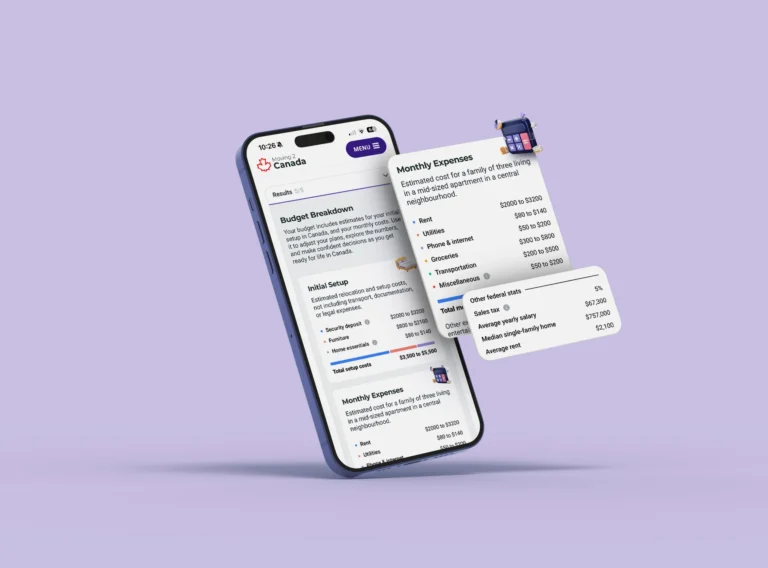
- Budget Calculator for Newcomers: Get a realistic picture of what life in Canada will cost based on where you plan to live.
- IEC Health Insurance Quote: Get a personalized health insurance quote for your working holiday in minutes.
About the author

Rebecca Major
-

Find the best immigration program for you
Take our free immigration quiz and we'll tell you the best immigration programs for you!
-

Get matched to job opportunities
Get matched to job opportunities from Canadian employers who are seeking to hire people with your skills.
-

Access our immigration roadmaps
Our immigration roadmaps will teach you the basics of Express Entry, study permits, and more! Take control of your own immigration process.
Unlock exclusive insights.
-
Find the best immigration program for you
Take our free immigration quiz and we'll tell you the best immigration programs for you!
-
Get matched to job opportunities
Get matched to job opportunities from Canadian employers who are seeking to hire people with your skills.
-
Access our immigration roadmaps
Our immigration roadmaps will teach you the basics of Express Entry, study permits, and more! Take control of your own immigration process.