By Dane Stewart
Updated on September 17, 2026
This content is sponsored by Cigna Healthcare. The views, opinions, and information expressed in this piece are those of Moving2Canada and do not reflect those of Cigna Healthcare. Cigna Healthcare is not responsible for the content, accuracy, or any representations made herein. It also contains affiliate links, meaning we may earn a commission if you click or sign up through them.
New Brunswick Medicare covers most essential services, but newcomers often face a wait of months before their card arrives. Here's how to stay protected.
This guide is for newcomers to Canada looking for information on New Brunswick health care. We’re going to cover eligibility for New Brunswick Medicare, how to apply, what it covers, and much more.
For many immigrants, one of Canada’s draws is the country’s publicly-funded health care system. But, you need to make sure you can access the system properly. Making sure you have health care coverage will ensure you’re covered for emergency medical expenses and won’t end up paying out of pocket.
In Canada, health services are managed at the provincial level. In the province of New Brunswick, public healthcare costs are managed through New Brunswick Medicare. To access this system, first, you need to get a New Brunswick Medicare Card. This guide will explain exactly how to sign up for New Brunswick Medicare and get your card.
Key Takeaways
- New Brunswick health care is managed through New Brunswick Medicare, the province’s public health insurance plan
- New Brunswick Medicare covers most medically required services provided by a doctor, including many in-hospital services
- For newcomers arriving from outside Canada, there is no wait period to apply for a New Brunswick Medicare Card, but applications can take many weeks to process (with recent reports suggesting an average of 15 weeks, but as many as nine months)
- To avoid paying out-of-pocket for medical expenses, newcomers may want to purchase private health insurance until their New Brunswick Medicare Card is approved

Stay protected in Canada!
Stay protected from day one in Canada!
What is New Brunswick Medicare? The Provincial Health Plan
New Brunswick Medicare is the province’s publicly-funded health coverage. This program provides health care coverage to all eligible New Brunswick residents, including Canadian citizens, permanent residents, along with certain international students and foreign workers.
Generally, New Brunswick Medicare pays for most medically required services provided by a physician, plus most insured hospital services and more.
- Check the list of common medical coverage here.
- Also read our section: What’s not covered by New Brunswick Medicare?
Who is eligible for New Brunswick Medicare?
To be eligible for New Brunswick Medicare, you must have legal status in Canada and be residing in New Brunswick with the intention of making New Brunswick your permanent and principal home. Eligible legal status includes Canadian citizens, permanent residents, certain work permit holders, and dependent family members.
Additionally, international students studying at select New Brunswick educational institutions are also eligible.
To demonstrate your eligibility, be prepared to provide proof of immigration status and proof of residency in New Brunswick.
Tourists and visitors are not eligible for New Brunswick Medicare.
How to Apply, Enroll, and Timing for Newcomers
To access New Brunswick Medicare, first you need to apply for a New Brunswick Medicare Card. Applications can be submitted online at this link.
If you are moving from outside Canada: You are eligible to apply for an NB Medicare Card as soon as you arrive.
If you are moving from another Canadian province: You are eligible for NB Medicare as of the first day of the third month following your move.
New Brunswick Medicare has notoriously slow processing times. Recent reports suggest it takes an average of 15 weeks for NB Medicare Cards to be processed, with some applicants reporting a processing time of nine months.
New residents should consider purchasing private health insurance plans to cover them until the provincial plan kicks in. Otherwise, you will have to pay out-of-pocket for medical expenses incurred before you receive your card. It is possible to have an NB Medicare Card backdated to your application date, but this is not guaranteed and would still require paying upfront costs out of pocket.
Which documents do I need to apply for Brunswick Medicare?
To apply for a New Brunswick Medicare Card, you need to submit three documents for each applicant:
(1) Proof of status in Canada
The following types of documents are accepted:
- Canadian passport or birth certificate
- Valid Confirmation of Permanent Residence
- Valid Permanent Resident Card (front and back)
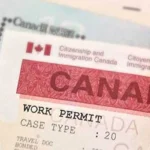
- Work Permit (shorter work permits may not be approved – if in doubt, contact NB Medicare)
- Study Permit (only certain schools/programs are eligible – see here)
- Record of Landing
(2) Proof of identity
To support your application, you must prove the identity of all those included in your application. For newcomers, the most accessible document is usually a copy of your valid foreign passport. However, you may also use a valid New Brunswick driver’s license or a health card from a previous province.
(3) Proof of New Brunswick Residency
You must prove you reside in New Brunswick. Documents must be valid and current and display your name and the NB residential address much match the one provided to NB Medicare. The following documents are acceptable:
- Mortgage Document
- Rental or Lease Agreement
- Utility Bill (phone, energy, cable/satellite, waste/sewer)
- Employment Confirmation (pay stub/letter from employer on company letterhead)
- Insurance Policy (home, tenant, auto)
- NB Motor Vehicle Registration
- NB Driver’s License or Identification Card
- Child Tax Benefit Statement
- NB Property Tax Bill
Additional Documents
Select applicants may require additional documents. For example, international students must provide proof of enrolement at an eligible institution for a full academic year. And, work permit holders whose permits are expiring soon must provide proof of maintained status. Check your application form for full instructions.
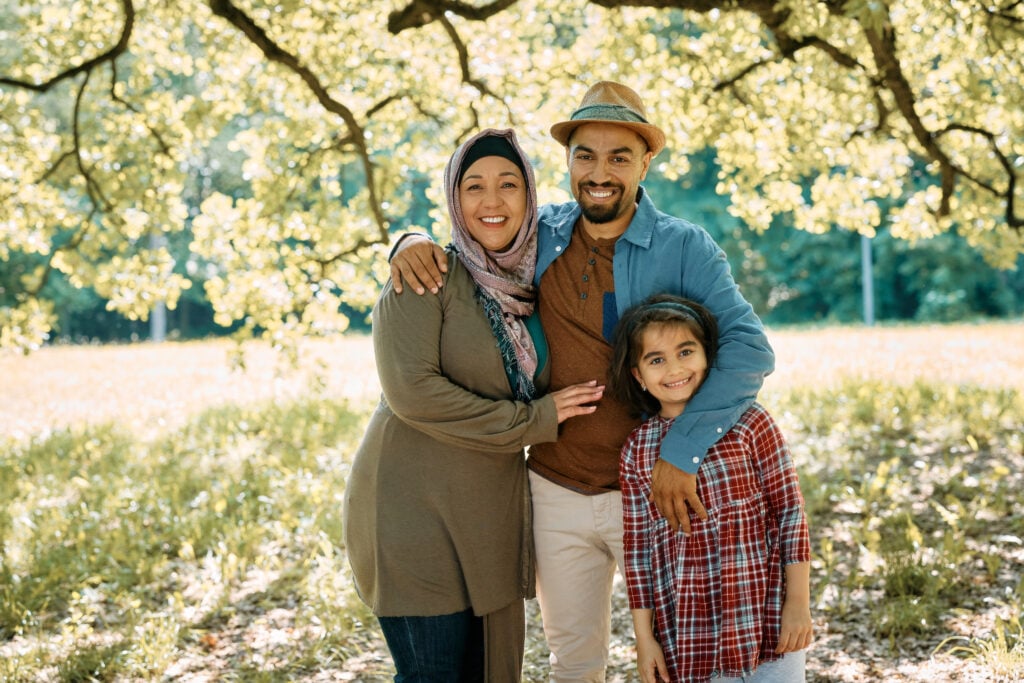
Planning ahead can help you avoid unexpected healthcare costs.
Avoid Unexpected Healthcare Costs
What’s covered by New Brunswick Medicare?
New Brunswick Medicare covers a few types of services. First, NB Medicare covers the following insured practitioner services:
- most medically required services provided by a physician in either a physician’s office or in an approved hospital; and
- certain specified surgical dental procedures provided by a dentist when the service is medically required and rendered in an approved hospital.
Next, NB Medicare covers the following insured hospital services, as long as they are provided in-hospital at an approved hospital facility in New Brunswick:
- standard hospital accommodation and meals;
- necessary nursing service;
- drugs administered while in the hospital;
- operating room, delivery room and anesthetic facilities;
- laboratory, X-ray, and other diagnostic services as deemed necessary;
- therapies such as physiotherapy, occupational therapy, speech therapy and audiology;
- radiotherapy; and
- routine surgical supplies.
What’s not covered by New Brunswick Medicare?
New Brunswick Medicare leaves major coverage gaps in areas like dental care, vision, home care, medical equipment, and long-term care.
Drugs are not covered by New Brunswick Medicare, but certain drug treatments may be covered by either the New Brunswick Prescription Drug Program or the New Brunswick Drug Plan. These two programs share similar names, but they cover different types of drugs for different populations – check them out to see if you qualify for prescription drug coverage.
The following are not covered by New Brunswick Medicare:
- acupuncture;
- advice or prescription renewal by telephone;
- ambulance services, as well as transportation costs to and from your place of residence to obtain medical or hospital services;
- anesthesia for dental work (except for specific circumstances);
- artificial insemination;
- blood taken in a doctor’s office;
- breast enlargement for cosmetic purposes;
- circumcision of newborns;
- complete medical examinations for the purpose of an annual check-up;
- dental services provided by a physician;
- dentures;
- drugs and medicines;
- elective plastic surgery or other services for cosmetic purposes;
- examinations, immunizations, diagnostic or other services at the request of any third party for the purposes of employment, travel, emigration or insurance;
- eye-glasses, frames or contact lenses, as well as refractions for prescription eye-glasses;
- gastric stapling or gastric bypass (stomach stapling);
- hospital visits solely for the administration of drugs, vaccines, serums or biological products;
- hypnosis;
- immunizations which are available through Public Health clinics, unless medical reasons require that they be given by a physician;
- medical materials;
- medications for the patient to take home from the hospital;
- otoplasty (correction of prominent ears) for those over 18 years of age;
- prosthetic devices or appliances, artificial limbs and such returnable items as walkers, special crutches and braces;
- removal of minor skin lesions such as warts – except when cancer is suspected;
- reversal of tubal ligation and vasectomy;
- services covered by the Workplace Health, Safety and Compensation Commission of New Brunswick, the Department of Veterans Affairs or under other legislation;
- services generally accepted within New Brunswick as experimental or that are provided as applied research;
- services provided by: chiropractors,chiropodists, dentists (except as stated previously), massotherapists, naturopaths,opticians, optometrists, orthodontists, osteopaths, pharmacists, physiotherapists, podiatrists, psychologists or private duty nurses;
- subsequent injections for impotence following the initial injection;
- surgical supplies; and
- the difference in rate between standard hospital accommodations and a semi-private or private room.
The information provided here is not intended to cover all situations. If you are unsure whether the service you will receive is an insured one, please discuss the issue with your physician.
Dental Coverage and Dental Insurance in New Brunswick
New Brunswick Medicare offers very little coverage for dental. Only dental surgeries are covered, and even this coverage is only for surgical dental procedures provided by a dentist when the service is medically required and performed in a hospital.
However, there are alternative options to get dental care.
Recently, Canada introduced the new Canada Dental Care Plan. This plan offers dental benefits to Canadian residents at low- and middle-incomes. Check your eligibility here. If eligible the CDCP will cover some basic dental care.
Additionally, the New Brunswick Health Services Dental Program offers limited assistance for low-income residents without insurance. Find out more here.
Finally, private health insurance plans often offer dental. Out-of-pocket dental costs can be substantial without insurance, so we always recommend considering private dental coverage, especially if you do not qualify for the CDCP or for employer-based dental benefits.
Private dental insurance is worth considering if you don’t qualify for the CDCP or employer benefits. Cigna Healthcare offers individual dental plans starting from around $1 a day, with options that bundle vision and hearing coverage — you can enrol year-round and coverage can start as soon as the following month.
What happens to my health coverage when I move to New Brunswick from another province?
If you’re moving to New Brunswick from another province, you become eligible for New Brunswick Medicare as of the first day of the third month after you arrive. After that date you can submit you NB Medicare Card application, which will take several weeks to process.
In the period between your arrival date and your coverage start, you should ensure you have health care coverage. It may be possible that your previous province of residence will provide some coverage during your transition period, but this is not guaranteed. We recommend purchasing private health coverage for the gap period until you receive your NB Medicare Card.
The New Brunswick Social Development Health Card
Low-income individuals receiving social assistance in New Brunswick may be eligible for a Social Development Health Card. The Social Development Health Card provides specific coverage for dental, vision, and drugs for eligible low-income individuals. New Brunswick extends special income-based coverage to children aged 0–18 in low-income families, adults receiving support from Social Development, and seniors receiving Guaranteed Income Supplements.
There is no standard application process for a health card through Social Development; eligibility is assessed by the program. To apply for a health card, you should contact your local office of the Department of Social Development.
Why Newcomers to New Brunswick Often Need Private Health Insurance
Newcomers to New Brunswick often choose to purchase private health insurance plans, especially during the first few months of their stay. It can take several months for a New Brunswick Medicare Card application to be processed and during this period, newcomers are expected to pay out of pocket for any medical expenses. Even though your NB Medicare Card may eventually be backdated to your application date, this is not guaranteed and still requires you to pay upfront for medical costs in the hopes of being reimbursed later.
Beyond a lack of coverage during the arrival period, New Brunswick Medicare provides only the most basic coverage. The provincial plan offers no coverage for ambulances, routine dental or vision coverage, hearing aids, nor prescription drugs. As such, many newcomers choose to purchase private health insurance plans to fill these gaps in coverage.
Sometimes private personal health insurance is provided through your employer, but if not you may purchase private coverage directly.
Cigna Healthcare offers international health insurance plans designed for people living, working, and settling abroad — with access to a global network of 2.4 million health professionals across more than 200 markets, multilingual support available 24/7, and flexible plans tailored to your needs and budget. You can get a quote in as little as two minutes.
Explore Cigna Healthcare’s international health plans here.
Employer Group Benefits vs Private Plans
If you’re working in New Brunswick, you may be offered health insurance through an employer group plan. These group benefits plans often include extended health and dental coverage at a lower cost than you would pay on your own, because the premiums are based on a larger group and are sometimes partially paid by the employer. For many workers, this is the simplest and most affordable way to get more comprehensive coverage beyond what New Brunswick Medicare provides, with lower premiums.
That said, employer coverage is not always permanent. If you leave your job, lose your benefits, or move into freelance or contract work, you may need to find your own plan. This is where private health insurance can be useful. Private plans are portable, meaning you can keep them regardless of where you work, and they can often be customized based on the types of coverage you actually need.
In some cases, employer group plans may offer broader coverage right away, especially for prescription drugs, dental, and dependents. But private plans can still be a strong option, particularly if you want to add coverage for things like vision care, hearing aids, massage therapy, physiotherapy, or other paramedical services that are not covered by the provincial plan.
Costs and How to Compare Health Insurance Plans in New Brunswick
The cost of private health insurance in New Brunswick can vary a lot. Premiums are usually based on factors like your age, tobacco use, family size, and the level of coverage you choose. A young single applicant looking for basic emergency or supplemental coverage will usually pay much less than a family seeking comprehensive prescription, dental, and paramedical benefits.
In general, private supplemental plans range from relatively affordable basic options to much more expensive plans with higher annual maximums and broader coverage. The lowest-cost plans may mainly help with emergency needs or limited extras, while higher-tier plans can provide stronger reimbursement for prescription drugs, dental services, vision care, and specialist treatments.
When comparing plans, don’t just look at the monthly premium. You should also compare what the plan actually covers. Pay close attention to prescription drug limits, annual dental maximums, and the number of covered visits for services like physiotherapy, massage therapy, psychology, or chiropractic care. Two plans may look similar at first glance, but the actual value can be quite different once you look at the details.
If you’re ready to explore your options, Cigna Healthcare offers flexible international health plans that can be tailored to your needs and budget — whether you’re a newcomer looking for basic coverage during your first months or a family seeking more comprehensive protection.
Get a free quote from Cigna Healthcare in under two minutes here and compare multiple options with our partners below.
Trusted Health Insurance Partners
Cigna Healthcare - Health Insurance for Stays of 4+ Months
BestQuote Travel & Health Insurance
Trusted Health Insurance Partners
Cigna Healthcare - Health Insurance for Stays of 4+ Months
BestQuote Travel & Health Insurance
Further Healthcare Resources for Newcomers in New Brunswick
- Wondering about your current prescription options? Dive into our article about obtaining a prescription in Canada.
- Discover here everything you need to know about private health insurance to cover your first months in Canada while waiting for provincial coverage.
- On maintained status and unsure about your health coverage? Read Health Insurance While on Maintained Status in Canada to understand your options and what to do next.
- Understand how the Canadian healthcare system works before you arrive.
New Brunswick Healthcare FAQs
Does New Brunswick have free healthcare?
New Brunswick provides publicly funded healthcare through the provincial New Brunswick Medicare program. Eligible residents who are Canadian citizens or legally entitled to remain in Canada and who make their permanent home in New Brunswick may receive coverage once they are registered for Medicare. Coverage can begin after eligibility is confirmed and an application has been approved.
In some cases, individuals moving to New Brunswick from another Canadian province may need to wait until the first day of the third month after establishing permanent residence before Medicare coverage begins.
Does New Brunswick have a health card?
Yes. New Brunswick issues a New Brunswick Medicare card to eligible residents who apply for and qualify for Medicare coverage. After a completed application is received and eligibility is confirmed, the province sends a letter indicating the start date of coverage, followed by the Medicare card.
The Medicare card allows eligible residents to obtain insured healthcare services. Residents must present their signed Medicare card to physicians or hospitals when accessing insured medical services.
Who is eligible for New Brunswick Medicare and how do I confirm my residency?
New Brunswick Medicare is available to eligible residents who have legal status in Canada and who make New Brunswick their permanent and principal home. To confirm residency, you usually need documents showing your name and New Brunswick address, such as a lease, utility bill, insurance policy, or employer letter.
Which dental services are covered by New Brunswick Medicare and when is private dental insurance needed?
New Brunswick Medicare covers only certain medically required dental surgeries performed by a dentist in an approved hospital. For routine dental care like cleanings, fillings, and checkups, you will usually need private dental insurance, employer benefits, or another dental program if you qualify.
How do the New Brunswick Drug Plan and Prescription Drug Program work for seniors and low-income residents?
These are separate public drug coverage programs that help certain New Brunswick residents pay for prescription medications. Eligibility and coverage depend on your age, income, and circumstances, so seniors and lower-income residents should review both programs carefully to see which one applies to them.
Related articles

Alberta Health Care (AHCIP) for Newcomers in 2026
Read more

Health Insurance BC for Newcomers: A Complete 2026 Guide
Read more

Manitoba Health Card: A 2026 Guide for Newcomers
Read more
Is Healthcare Free in Canada? How the Canadian Healthcare System Works
Read more
About the author