








Updated on June 9, 2026

Your practical guide to healthcare, housing, cost of living, immigration, and everyday life in Canada in 2026
Whether you are planning to move to Canada or have just arrived, this guide covers what daily life actually looks like. You will find practical information on housing costs, healthcare, immigration status, transportation, work, and finances — organised by topic so you can go directly to what matters most to you. The goal is to give you a realistic picture, not an optimistic one.
Key Takeaways
- Canada offers a high quality of life, low crime, strong public services, diverse cities, and access to nature.
- Healthcare is publicly funded for eligible residents, but most newcomers face a waiting period of up to three months before coverage begins. Private health insurance is essential during this gap
- Your immigration status determines what you can do in Canada, whether your status is visitor, worker, student, permanent resident, or citizen. Each comes with different rights and access to services
- Cost of living varies significantly by city, which makes it hard to give a general cost for all of Canada, but there are multiple tools you can use.
- Many newcomers start in a job below their qualification level while building Canadian experience. This is common and does not have to be permanent
- Immigration rules, health coverage, and residency requirements can change; always verify with official Canadian government sources before making decisions
What Is It Like to Live in Canada?
Living in Canada in 2026 means living in a stable democracy with a high standard of living, strong public schools, and cities that are genuinely diverse. Canada is one of the most multicultural countries in the world, over 140 languages are spoken in Toronto alone, and around 23% of the population is immigrants.
Canada is officially bilingual. English and French are the two official languages, though in practice, most daily life outside Quebec runs in English.
The Canadian Charter of Rights and Freedoms protects people from discrimination based on ethnicity, religion, or sexual orientation. Multiculturalism is not just a social reality — it is an official national policy.
What makes Canada stand out:
- Low crime rate by global standards
- Strong public services, healthcare, education, social support
- Access to nature: Canada has the world’s longest coastline and around 20% of the world’s fresh water
- Worker protections closer to European standards than American ones
What to be realistic about:
- Taxes are higher than in many countries, especially the US
- Winters are long and cold in most regions; only Vancouver and parts of British Columbia have mild winters
- Cost of living is really high in major cities
- Safety and job prospects vary significantly by region
Canada is a large country. Daily life in Vancouver, Calgary, Montreal, or a rural area in New Brunswick can feel completely different. Before deciding where to settle, weigh expected income against local costs, winter tolerance, and career prospects in your field.
Living in Canada and Immigration Status: What You Need to Know
Your experience living in Canada depends heavily on your immigration status. Different statuses come with very different rights and access to services.
Main immigration statuses:
- Visitor visa: usually allows a stay of up to six months; does not normally allow work
- Work permit: employer-specific or open; allows you to work legally in Canada
- Study permit: for international students; may include limited work rights
- Permanent residency (PR): live and work almost anywhere in Canada; access most social benefits and provincial health insurance once eligible. You must spend at least 730 days physically in Canada during every five-year period to maintain your PR status. Learn more about the common PR pathways to Canada.
- Canadian citizenship: full rights, including voting and a Canadian passport. To apply for citizenship, you generally need 1,095 days of physical presence in the previous five years, plus language and knowledge test requirements for most adults.
The Cost of Living in Canada
Canada’s cost of living varies a lot depending on where you settle, the type of housing you choose, and how many people are in your household. Housing is almost always the largest expense.
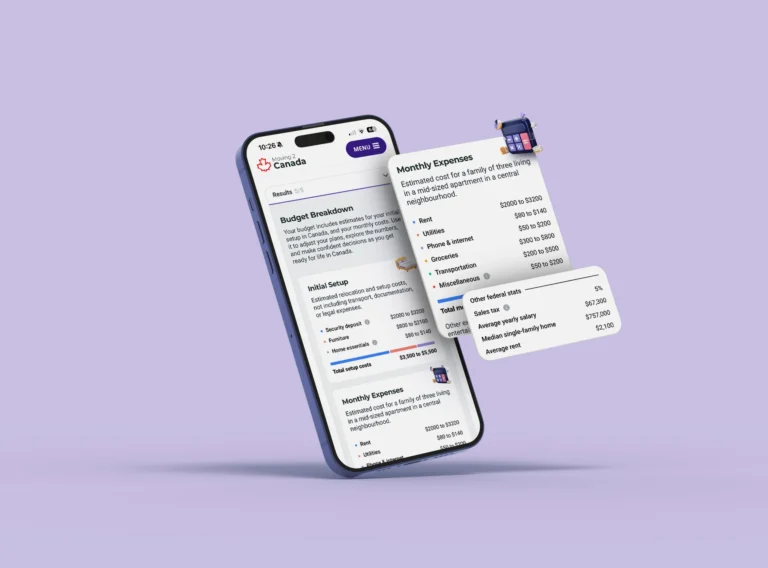
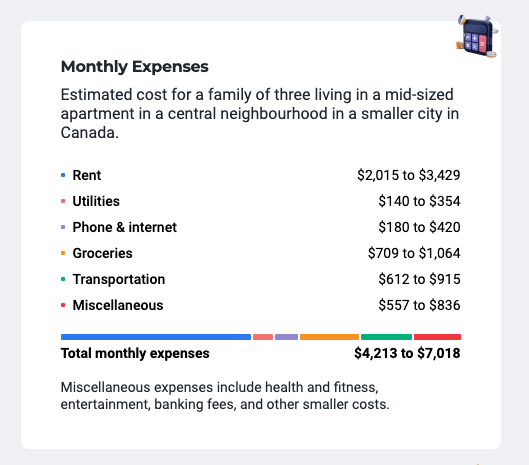
To give you a general idea of what monthly expenses look like, the breakdown below shows estimated costs for a family of three living in a mid-sized apartment in a central neighbourhood in a smaller Canadian city, as of 2026.
Total monthly expenses in Canada range from $4,213 to $7,018 CAD, depending on your specific situation.
This is just one example. Costs in Canada vary widely from one province to another, and within the same city, they change depending on the type of housing and the size of your household.
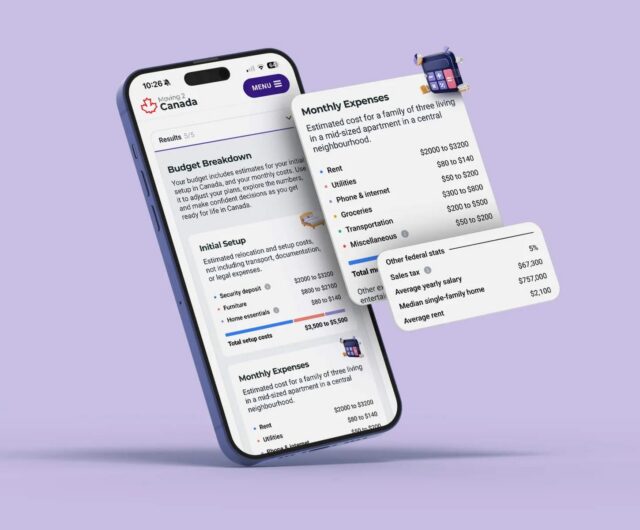
Before you move, use Moving2Canada’s Budget Calculator to build a personalized estimate based on your own situation, family size, destination city, and housing type. It gives you a much more accurate picture than any general figure can.
Resources About Utilities in Canada
Read our Guides: Cost of living in major Canadian cities
- Cost of Living in Toronto
- Cost of Living in Vancouver
- Cost of Living in Montreal
- Cost of living in Calgary
Our top guides for newcomers looking for the cost of living in Canada
Housing: Renting and Buying in Canada
Housing is the biggest financial challenge for most newcomers, especially in major cities like Toronto and Vancouver.
Renting a house/apartment — what to expect:
- Move-in costs typically include first and last month’s rent, or a security deposit
- Landlords often ask for proof of income, references, and Canadian credit history
- Usually, rent does not include utilities
- The landlord can request you to buy insurance for the duration of your lease
If it is your first time renting in Canada, our renting guides can help you make the best decision and avoid mistakes and scams:
- Renting a Home in Canada: A Complete Guide for Newcomers
- Top 5 Challenges When Renting in Canada as a Newcomer
Buying a house/apartment — key points:
- Recent federal rules limit some foreign buyers from purchasing property
- You need a down payment of at least 5–10%, plus land transfer tax, property tax, home insurance, inspections, and condo fees
- Some provinces and municipalities offer first-time buyer incentives — check current government rules before committing
If it is your first time buying a property in Canada, our guides can help you make the best decision and avoid mistakes and scams:

Settle into life in Canada
Everyday Expenses, Sales Tax, and Occasional Costs
One thing that surprises many newcomers: prices in Canadian stores do not include tax. What you see on the shelf is not what you pay at the till.
How sales tax works:
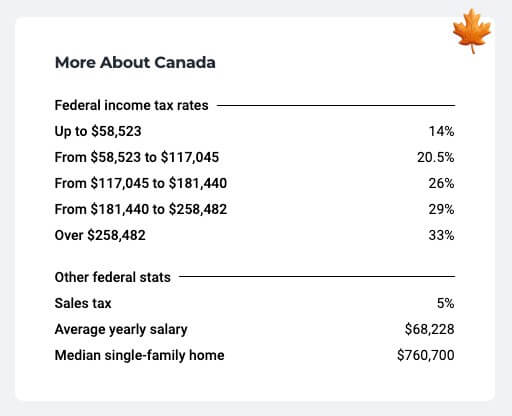
- Federal Goods and Services Tax (GST) – 5%
- Provinces add either Provincial Sales Tax (PST) or use a combined Harmonized Sales Tax (HST)
The total varies by province, but you can usually expect to pay 5–15% on top of listed prices, depending on where you are.
Other costs worth planning for:
- Car repairs and winter car supplies
- Snow removal services or Snow removal supplies
- Healthcare costs not covered by public coverage
- Moving apartments — first and last month’s rent adds up fast
Keep an emergency fund of at least three to six months of living expenses. It takes time to get settled, find the right job, and stabilize your finances.
What's the real cost of living in Canada? Find out by city
Our top resources on life in Canada
The best bank for newcomers
Find out which bank best fits your needs!
Transfer your money to Canada cheaply
These are the best deals on international money transfers.
Finding accommodation
Finding a comfortable place to live is one of the most important priorities for new arrivals.
Your first week in Canada
Make your Canadian adventure a success by following these steps during your first week.
Get a phone plan
Canadian phone providers are a little confusing. Let us explain how it works.
Exploring destinations
Explore Canada’s many popular destinations in our destination guides.
Resources to Help You Succeed in Canada
The Bank for Newcomers
Internet That Works For You
Get The Most Out Of Your Budget
Affordable Accommodation
Stress Free Access to a Car
Skip The Walk-In Clinic
The Bank for Newcomers
Internet That Works For You
Affordable Accommodation
Stress Free Access to a Car
Move on a Budget
Arrange a Phone Before You Leave
Setting up your finances
How to manage your finances
Our best recommendations on managing your finances as a new arrival.
Choosing a bank
These are the different options for banking in Canada.
Filing taxes in Canada
Depending on how long you live in Canada, you may need to file taxes. Here’s how it works.
Credit scores in Canada
Building a good credit score is essential to your long-term financial success.
Start investing
Interested in investing in Canada? There are tons of unique accounts that can pay off for your investments.
Can you afford a mortgage?
There are a range of mortgage calculators that can help you work out your mortgage payments, if you should rent or buy, and more.


Insurance For Life In Canada
How Health Insurance Works in Canada
Canada has a publicly funded healthcare system, but it doesn’t cover everything or everyone. If you’re coming to Canada as a worker, student, or permanent resident, understanding how health insurance in Canada works is important.
Health insurance for your first few months in Canada
New residents to Canada get different access to healthcare depending on their immigration status. Learn more about your insurance needs for your first few months in Canada.
IEC Health Insurance
Getting adequate health insurance is mandatory if you want to receive your IEC work permit (including working holidays). Learn which insurance counts for your IEC.
Snow Sports Insurance
Unfortunately for newcomers to Canada and temporary residents, it’s not just a matter of renting or buying some gear and lift tickets and hitting the slopes. You need to think about whether your health insurance policy covers snow sports.
Home Insurance for Canada
Choosing the right home insurance can be confusing. There are so many options, and it’s hard to know which policy is the right one for your new home. We’re going to explain home insurance in this article, so you are empowered to choose the best home insurance for your needs.
Auto Insurance in Canada
With limited public transport options in many rural areas and even in some cities, Canada is a nation of vehicle owners.
But finding the right auto insurance policy can be challenging, especially for newcomers who may not be as familiar with Canada’s provincial licensing and insurance requirements.
Tour Canada's Top Destinations
Subscribe to our YouTube channel






Driving in Canada
How to get a license
Find out how to legally get on the road in each of Canada’s provinces.
Buying a car in Canada
Follow these tips to ensure you make the best decision when buying a car.
Driving in winter
Driving in the winter can be a little scary to start. Follow these steps to ease onto the road.
Starting A Family in Canada
A Checklist for Starting a Family in Canada
Starting a family is a big milestone for anyone moving to Canada. There are new social benefits and healthcare systems to navigate – and all (probably) without the same level of support from family and friends that you may have in your home country.
Maternity and Parental Leave in Canada
Parental leave allows parents to take time off work to bond with and care for their newborns without losing their jobs. However, navigating parental leave as a newcomer to Canada can be complex, with different types of leave and eligibility criteria to consider. This guide breaks down everything you need to know about maternity leave and parental leave in Canada.
Pregnant and Moving To Canada
Getting pregnant and expanding your family is an incredibly exciting and meaningful life event. Nothing should derail your excitement – not even deciding to move to Canada.
Latest Updates

About the author