Updated on July 28, 2026

This content is sponsored by Cigna Healthcare. The views, opinions, and information expressed in this piece are those of Moving2Canada and do not reflect those of Cigna Healthcare. Cigna Healthcare is not responsible for the content, accuracy, or any representations made herein. It also contains affiliate links, meaning we may earn a commission if you click or sign up through them.
Canada is well known for its publicly funded health care system. However, one challenge many newcomers and long-time residents face is finding a family doctor.
Family doctors play an important role in Canada’s health care system. They are often your first point of contact for non-emergency medical concerns, help manage ongoing health conditions, coordinate specialist referrals, and provide preventative care throughout your life.
The challenge is that demand for family doctors currently exceeds supply in many parts of Canada. As a result, many Canadians spend months or even years searching for a primary care provider. But, the reality is that many Canadian residents still prefer the certainty of no out-of-pocket costs for many doctor visits over an entirely private system – even if the system is a little clogged.
In this post, we dig into Canada’s healthcare system to find out just how hard it is to find a family doctor in Canada. Plus, some alternatives to the family doctor system if you’re having a hard time sourcing one for yourself and your loved ones.
Key Takeaways
- Register early. Join your province’s family doctor registry or matching service as soon as you’re eligible, since waitlists can run from months to years.
- Stay proactive while you wait. Check newly opened clinics, ask your community and coworkers, and search Reddit for local doctors currently accepting patients.
- Consider a nurse practitioner. In many provinces, they offer the same core services as family doctors (diagnosis, prescriptions, referrals, etc) and are often easier to access.
- You can still get care without a family doctor. Walk-in clinics, urgent care, 8-1-1, pharmacists, and community health centres cover most non-emergency needs.
- Private telehealth is an affordable backup. For around $80/month, you can access a doctor or nurse practitioner virtually for prescriptions, notes, and lab requests.

Stay protected in Canada!
Stay protected from day one in Canada!
Overview: Family Doctors and Health Care for Newcomers
A family doctor is a primary care provider who helps manage your overall health needs. In Canada, your family doctor serves as a point of contact with the health care system. A family doctor can do the following:
- Diagnose and treat common illnesses and injuries
- Monitor chronic conditions such as diabetes, asthma, and high blood pressure
- Order tests and medical imaging
- Prescribe medications
- Provide preventative care and routine screenings
- Refer you to specialists when needed
In Canada, specialists generally require a referral from a family doctor or another qualified health care professional. This means finding a family doctor can make it easier to access additional health services throughout the health system.
Research consistently shows that patients with ongoing access to primary care experience better health outcomes, earlier diagnosis of health concerns, and better management of chronic conditions.
What’s the Best Way to Find a Family Doctor in Canada?
Finding a family doctor is part art, part science, and part luck.
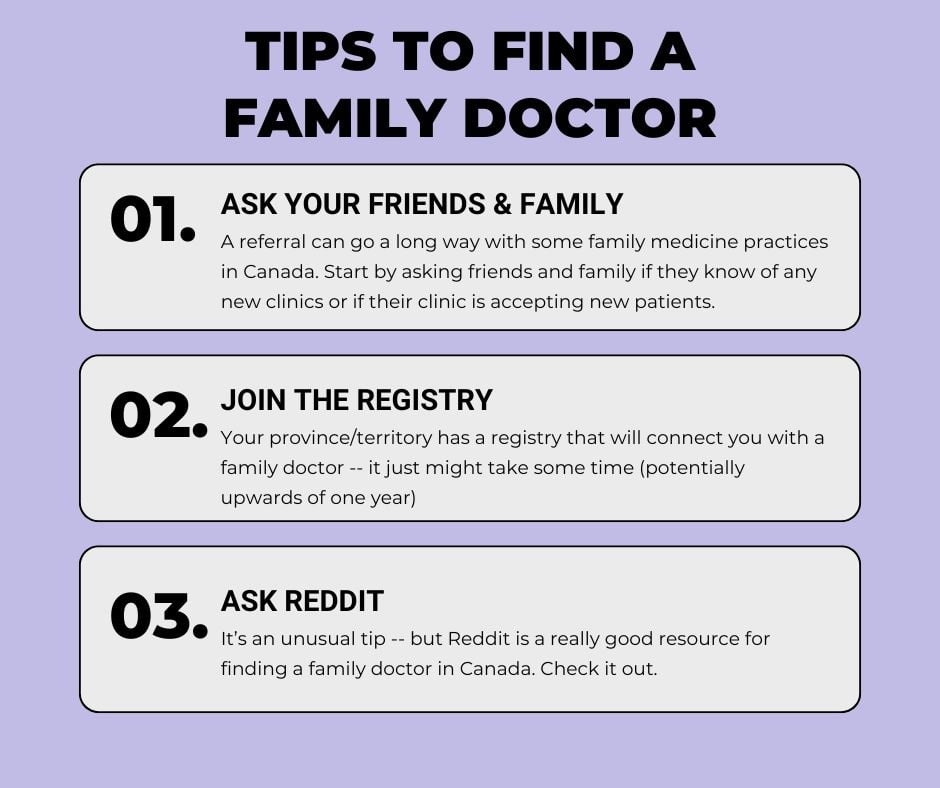
In most provinces and territories, your first step should be joining the provincial registry or matching service. These programs are designed to connect unattached patients with doctors who are accepting new patients.
However, waiting lists can be long.
For that reason, it’s worth taking a proactive approach while you wait. Search online for newly opened clinics, ask people in your community for recommendations, and regularly check local physician directories.
Personal networks can sometimes be surprisingly effective. Friends, family members, coworkers, settlement agencies, and community organizations may know about physicians who recently opened a practice or are currently accepting patients.
In our experience
Looking back, I can’t believe how lucky I was. When I got my health care card in BC, I called the closest clinic to my house, asked to see a doctor, and I was added to his list. I later realised that I just so happened to call this doctor on his first day of work in BC after he moved here from another province. So, I got very lucky.
I’ve now seen multiple friends and loved ones have their family doctors retire or move, and they can’t get a new one for years. It’s really challenging for them, especially if they have chronic conditions.
Stephanie Ford
Immigration & Legal Content Writer at Moving2Canada


Quick Ways to Find a Family Doctor or Nurse Practitioner
Many Canadians struggle to access family doctors equally, particularly in areas experiencing physician shortages. Ontario, British Columbia, Quebec, and many rural and northern communities continue to face significant challenges matching patients with family doctors.
Just want the fastest way to find a family doctor in Canada? These are the most effective places to start:
- Register with your province’s family doctor registry or matching service as soon as you’re eligible.
- Check local walk-in clinics regularly. Some clinics maintain waiting lists for new patients or eventually transition walk-in patients into family practice patients.
- Search for newly opened clinics and recently hired physicians who may be accepting new patients.
- Ask friends, family members, coworkers, and community groups for recommendations.
- Consider virtual care options for non-urgent consultations while waiting for a permanent primary care provider.
Many provinces now operate centralized waitlists designed to connect patients with family doctors accepting new patients.
We dive deeper into the best ways to find a family doctor below.
Doctor or Nurse Practitioner: Which Should You Choose?
When searching for a primary care provider, don’t focus exclusively on family doctors. In many provinces, nurse practitioners can provide many of the same services as family physicians. A nurse practitioner can do the following:
- Diagnose illnesses
- Order laboratory tests and diagnostic imaging
- Prescribe many medications
- Manage chronic conditions
- Provide preventative care
- Refer patients to specialists
For many patients, a nurse practitioner can serve as an effective long-term primary care provider, especially when family doctors are in short supply.
When booking an appointment, it’s worth confirming the clinician’s scope of practice and determining whether a doctor or nurse practitioner is the best fit for your health needs.
How to Register with Your Provincial Health Registry
Several provinces operate centralized registries that help connect patients with family doctors and nurse practitioners. For example, British Columbia’s Health Connect Registry allows residents to register online and be matched with a primary care provider when one becomes available.
Although the exact process varies by province, it typically involves:
- Visiting the provincial registry website
- Providing your personal information and health card details (if you don’t have a health card, we recommend getting one as soon as you’re eligible)
- Confirming your eligibility
- Completing information about your health needs
- Waiting to be contacted directly when a provider becomes available
It’s important to understand that registration does not guarantee immediate placement. Matching timelines vary based on physician availability, local demand, and your community’s health care resources.
How to Find a Family Doctor in Your Province
Most provinces and territories operate either a centralized registry, matching service, or physician directory.
Alberta
British Columbia
- Health Connect Registry
- Find A Doctor BC (this one is a gold mine if you’re looking for a doctor in the near term — it requires regularly checking back in, but it can be much faster than the health connect registry!)
Manitoba
New Brunswick
Newfoundland and Labrador
Northwest Territories
Nova Scotia
Nunavut
Ontario
- Health Care Connect
- College of Physicians and Surgeons of Ontario Physician Search
- Call 8-1-1 for assistance
Prince Edward Island
Quebec
Saskatchewan
Yukon
Reddit is also a relatively good resource for finding a family doctor. There are many examples of people jumping onto the forum for their local area and getting multiple options for family doctors that are currently accepting patients.
How Long Does It Take to Find a Family Doctor in Canada?
There is no single answer. Wait times vary significantly depending on where you live, physician availability, population growth, and local demand. Some patients may find a family doctor within a few months. Others may remain on provincial waitlists for several years.
Urban centres, rural communities, and northern regions can all experience different levels of physician shortages, making it difficult to predict exactly how long the process will take.
Why Canadians Wait for Appointments
As you settle into life in Canada, you might notice that many Canadians are used to long wait times for doctors’ appointments and other health care needs. Several factors contribute to family doctor shortages and long wait times. These include the growth of Canada’s population in recent years coupled with the aging population. As the baby boomer generation gets older, they need more medical care.
Meanwhile, many physicians in Canada are retiring, leaving a gap in the medical system. These gaps are even more common in rural and northern communities which can struggle to recruit physicians.
All these pressures affect both family doctors and specialists, contributing to longer wait times throughout the health care system.
Where to Get Medical Help and Health Advice While Waiting
Fortunately, not having a family doctor does not mean you cannot access medical care.
First and foremost, if you are experiencing a medical emergency, always call 9-1-1 or visit an emergency department at a hospital.
Walk-In Clinics
Walk-in clinics provide non-emergency care for patients without a family doctor. Most operate on a first-come, first-served basis, although some offer appointments or online registration.
Walk-in clinics can often treat minor illnesses, infections, injuries, prescription renewals, and other routine concerns.
Urgent Care Centres
Urgent care centres and Urgent and Primary Care Centres provide treatment for illnesses and injuries that require prompt attention but are not life-threatening.
These centres can often help with sprains, minor fractures, infections, fevers, and similar concerns.
8-1-1 Non-Emergency Medical Advice Line
Many provinces offer free telehealth services through 8-1-1 or similar programs.
These services typically connect patients with registered nurses who can provide health advice, assess symptoms, and recommend appropriate next steps.
For example, HealthLink BC provides health information and, in some situations, access to virtual physician consultations.
Private Telehealth Providers
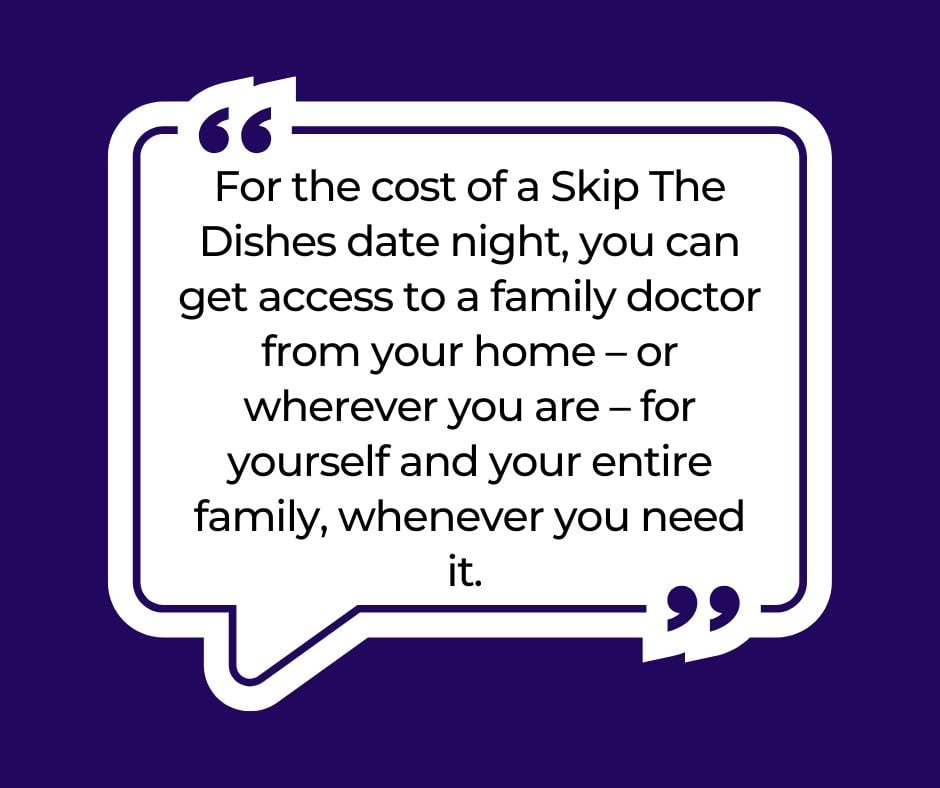
Private telehealth providers are making it easier than ever to access primary healthcare in Canada. While these services typically involve an additional fee, plans can start at around CAD $80, making them an affordable option for many individuals and families. Some provinces also offer publicly funded virtual care programs, including Nova Scotia, Prince Edward Island, and New Brunswick. Eligibility and coverage vary, so it’s worth checking your provincial healthcare resources for the latest information.
Through our partner Cigna Healthcare, eligible members can access convenient virtual healthcare services, including unlimited phone or video consultations with licensed doctors, as well as counselling and wellbeing coaching. Whether you’re at home, at work, or travelling abroad, professional healthcare support is available whenever you need it.
The Cigna Wellbeing® App also makes it easy to manage your health on the go. You can access Global Telehealth consultations from virtually anywhere in the world, view your policy documents through the online customer portal, and manage your coverage from your mobile device. Get a FREE quote form Cigna today!
Telehealth services can help with many everyday healthcare needs, including medical advice, prescriptions, referrals for lab work, and doctor’s notes, all without the need to visit a clinic in person.

Exploring private cover options can help you avoid gaps in protection
Exploring private cover options early can help you avoid gaps in protection
Pharmacists
Pharmacists can now help with a growing range of minor ailments in many provinces.
Depending on where you live, pharmacists may be able to assess and treat conditions such as urinary tract infections, seasonal allergies, skin conditions, and other common health concerns.
Community Health Centres
Community Health Centres provide team-based care that may include physicians, nurse practitioners, nurses, social workers, mental health professionals, and other health care providers.
Many Community Health Centres focus on serving specific communities and may provide services regardless of insurance status or provincial health insurance eligibility.
Student-Run Clinics
Some universities operate supervised student-run clinics that provide basic medical services at little or no cost.
These clinics can be particularly helpful for uninsured patients or individuals facing barriers to accessing traditional care.
Prepare for Your First Appointment with a Family Doctor
Once you’ve found a family doctor or nurse practitioner, it’s worth preparing for your first visit. For your first visit, try to bring along the following: your provincial health card, list of medications you take, vaccination records, previous medical records (if you have these), a summary of your medical history, and any information about ongoing health concerns.
It’s also helpful to ask questions about follow-up appointments, specialist referrals, continuity of care, and how to access care after hours.
What’s the Best Site for Doctor Reviews in Canada?
There is no single official doctor review website in Canada, but patients commonly voice their reviews in places like Google Reviews, RateMDs, and on local community groups, including on Facebook and Reddit.
It’s also worth checking your provincial College of Physicians and Surgeons, which regulates doctors and may provide information about physician credentials, licensing, and disciplinary history.
More Helpful Healthcare Resources for Newcomers to Canada
If you’re new to Canada, understanding how the health system works can take time.
- Learn the process step by step on how prescriptions work in Canada and when you have to pay.
- New to Canada and not sure what insurance you need? Our article Coverage on Your First Months in Canada covers it in simple terms.
- Moving from the UK?. See how Canada’s healthcare system differs from the NHS and why it matters.
- Pregnant and planning to move? Learn how pregnancy affects visas and healthcare access in Canada.
Finding a family doctor can take patience, but registering early, staying proactive, and using alternative care options can help ensure you continue receiving the medical support you need while searching for a permanent primary care provider.
About the author