There’s a lot of hype around Black Friday in Canada – happening this Friday, November 27. There are some pretty good deals on offer too – but any time you’re ‘saving money’ on a sale, the reality is that you’re spending money too.
This year, Canadian households are heading into the sales with tighter budgets. Canadians plan to spend an average of $911 on holiday gifts, down $64 from last year.
To help you manage the trade off between saving using Black Friday deals and spending your hard earned cash, we’ve pulled together some of our team’s favourite tips for shopping wisely on Black Friday in Canada.
Key Black Friday Sale Dates for 2026 in Canada
Friday November 27 – Black Friday
Saturday November 28 – Small Business Saturday
Monday November 30 – Cyber Monday
Tuesday December 1 – Giving Tuesday (not a sale, it’s a day for donating to charity)
Monday December 14 – Green Monday (not sustainability focused, it’s a sales day)
Saturday December 26 – Boxing Day, and the start of Boxing Week sales
The takeaway: if you miss a deal on Black Friday, you might see it again afterwards.
Free Tool
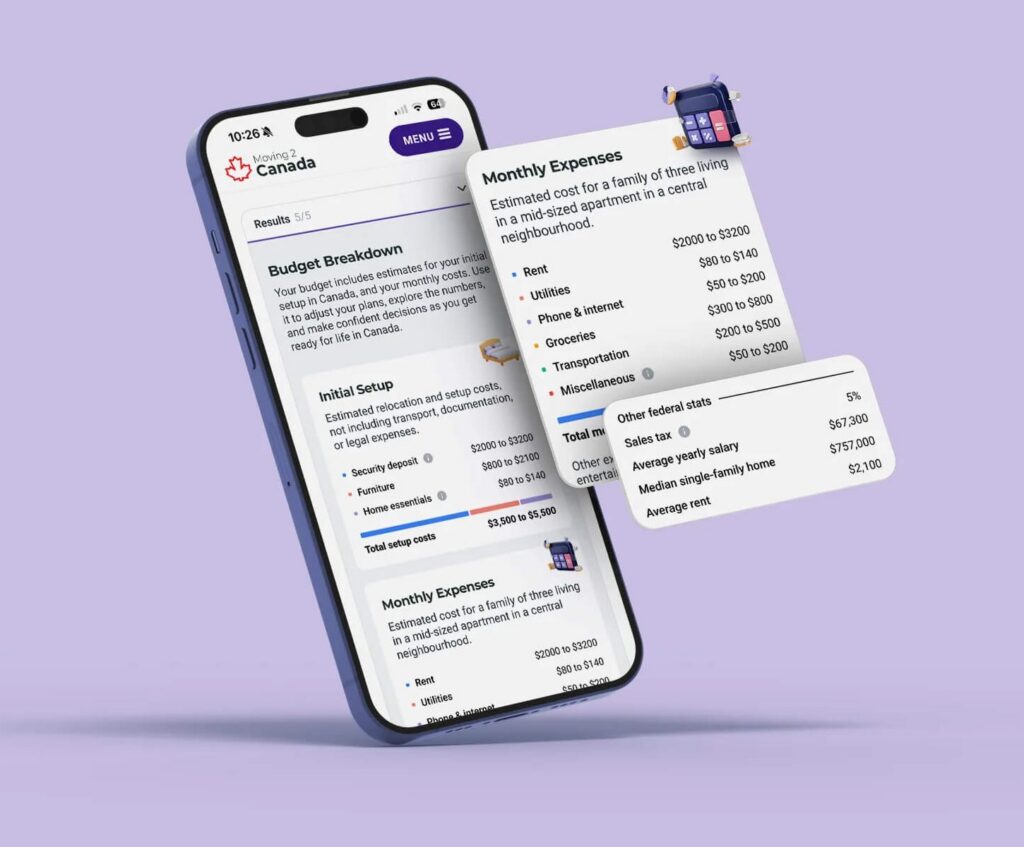
What's the real cost of living in Canada? Find out by city
Rent, groceries, transit, and more! See a full cost breakdown for your top Canadian cities before you arrive. Built for newcomers planning their move.
Try the free cost of living calculator
Black Friday Tricks To Know About
We aren’t psychologists, so we can’t speak to the why – but seeing items on sale just sparks something in a lot of us. Maybe it’s the combination of the dopamine hit from buying something with a feeling of ‘winning’ when you get a really good deal.
But chasing Black Friday deals comes with a real risk of overspending. We’d argue the biggest risk isn’t missing a deal, it’s carrying debt into the new year for things you didn’t need. Here are some of the ‘dirty little secrets’ about Black Friday in Canada:
- Urgency is engineered. Countdown timers, “only 3 left” banners and one-day pricing are designed to rush you past the question “do I need this?”.
- Not every “was” price is real. It’s illegal in Canada to advertise a discount against a made-up regular price, and the Competition Bureau reported a surge in complaints about inflated regular prices ahead of last year’s sales. A big percentage off doesn’t guarantee that the deal is real.
- “Buy now, pay later” adds up quietly. Several small instalment plans across different apps can quickly add up to a payment you can’t cover in January.
- Credit can turn a discount into a cost. If you don’t pay your statement in full, interest is charged from the day you made the purchase, not just on what’s left over. If you overspend on Black Friday and can’t pay your card balance in full, you may end up paying more than what you ‘saved’ in interest.
What your Black Friday haul really costs on a credit card
A $3,000 Black Friday haul left on a typical credit card until the end of February costs about $163 in interest, and around $235 on a store card (depending on your card’s terms and conditions). Here’s why.
In Canada, if you pay your full statement balance by the due date, you pay no interest on purchases because federally regulated lenders must give you at least a 21-day grace period. But if you don’t pay in full, interest is typically charged from the date you made each purchase. Most standard Canadian cards charge 19.99% to 23.99% on purchases, and store cards often charge 25.99% to 29.99%.
This means your Black Friday deals could actually cost you more money if you can’t pay off your credit card balance within your card’s grace period.
Here’s a hypothetical example of what that could look like (your costs could vary depending on your card’s terms and conditions):
| Black Friday purchase | Sale price | Interest by Feb 28 at 20.99% | Interest by Feb 28 at 29.99% |
| Winter coat and boots | $300 | $16 | $24 |
| Game console | $500 | $27 | $39 |
| 55″ TV | $700 | $38 | $55 |
| Laptop | $1,000 | $54 | $78 |
| Gifts for the family | $500 | $27 | $39 |
| Whole haul | $3,000 | $163 | $235 |
Estimates: purchases made November 27, 2026, unpaid until February 28, 2027 (93 days). Interest accrues daily and compounds monthly. Excludes late fees and missed-payment penalties. Your card’s rate may differ.
Tips and tricks to avoid buying things you don’t need
We’ve shared this list of tips and tricks our team uses to avoid buying things we don’t need or won’t use well on Black Friday:
Before you shop
- Know your prices now. Screenshot the current price of everything on your list this week. On Black Friday you’ll know instantly whether a “deal” is real.
- Unsubscribe and mute. Unsubscribe from retailer email lists and turn off shopping app notifications until December. You’re going to be inundated with deals during the Black Friday sales period, and leaving the lists can remove temptation.
- Pre-load a prepaid card or move your budget to a separate account. When it’s gone, you’re done.
- Remove saved cards from browsers and shopping sites. Having to type your card details adds an extra moment to ask “do I need this?”.
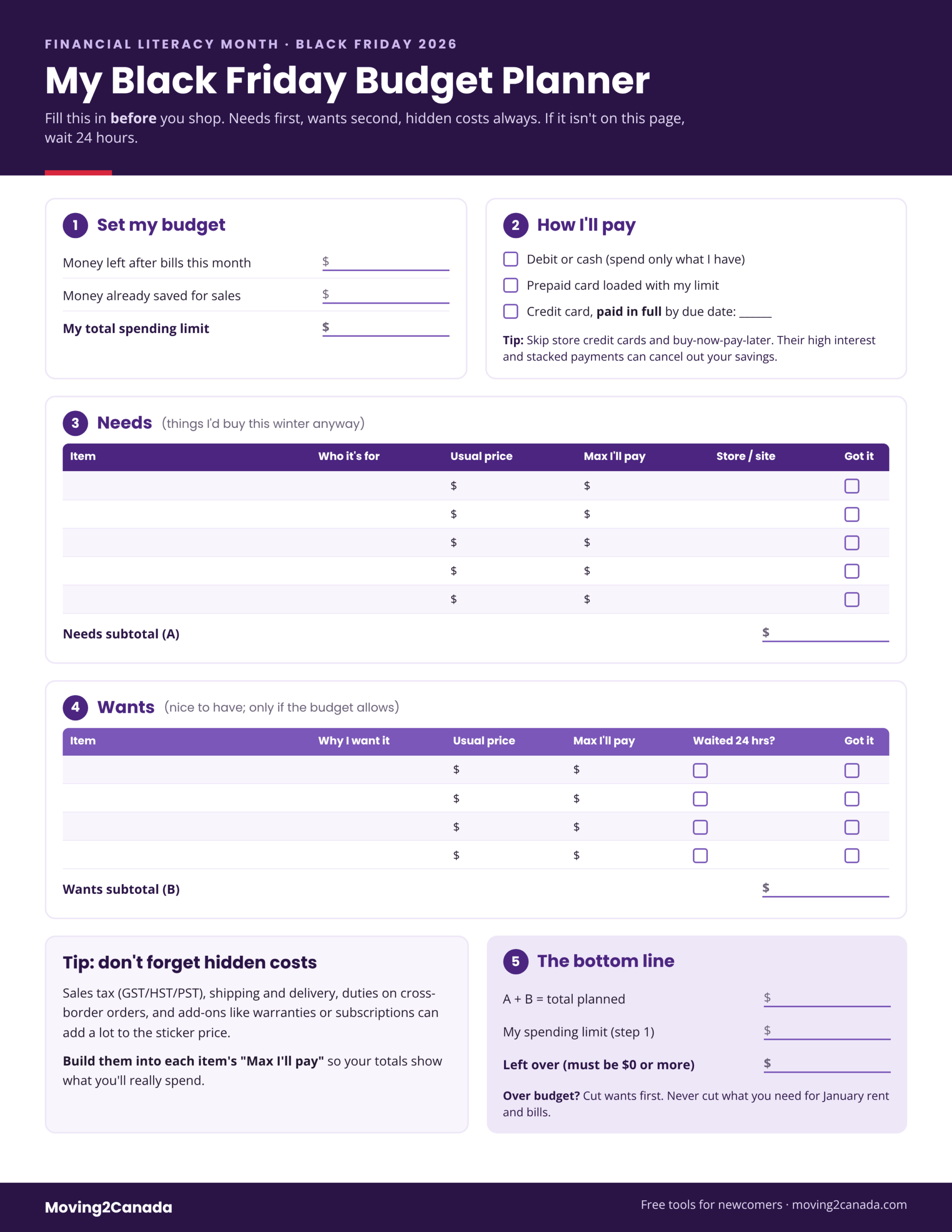
- Use our template to help you budget. Get it here:
Keep these things in mind while you shop on Black Friday
- Shop the list, not the store. Search for specific items rather than browsing the “doorbuster” pages.
- Use the 24-hour rule. Anything not on your list goes in the cart and waits a day. The 24-hour rule can help you balance your excitement for the deal with the reality of the purchase, and it’s really effective.
- Do the hours-of-work test. Divide the price by your after-tax hourly pay. A $240 jacket at $24 an hour is 10 hours of work. Is it worth it?
- Ignore “spend $X more for free shipping.” Spending $20 extra to save $8 on shipping is not a saving if you’re buying stuff you don’t need or won’t use.
- Skip store credit cards and buy-now-pay-later offers. A one-time 15% discount rarely outweighs a 29.99% interest rate or a stack of instalment payments.
- Check return policies first. Some Black Friday items are final sale, and return windows are sometimes shorter (sometimes they’re longer too).
Your Post-Sale Checklist
- Track what you spent. Compare it against your worksheet the same day.
- Return what you regret. If something doesn’t fit your plan, return it within the window.
- Pay off any credit card balance before the due date, or set up an automatic full-balance payment.
Quick Tips for Spending Wisely During Black Friday
These quick tips can help you to spend wisely and not overspend on Black Friday:
- Buy a prepaid credit card specifically for Black Friday, so you can’t overspend, or consider using a debit card.
- Check online secondhand marketplaces before buying. If you can get new or nearly new products for a bigger discount by buying it secondhand, it may be worth considering buying used.
- Make that list of things you need and want – and set a realistic budget for purchasing them.
- It can be a helpful mental trick to allocate an amount of money that something you want is ‘worth’ to you before you see the sale pricing too. This can help you decide if the sales price really offers value to your life or if it’s just clever marketing.
- Use our Black Friday spending template to help keep track of what you’ve spent, and how it’s impacting your finances in Canada.
Plus a tip for next year: Save up for a few months in advance of the sales. Then, you have some allocated cash to put towards items you want and need instead of going into debt. Set a reminder now for May 1, 2027 to set up an automated bank transfer to start saving money especially for Black Friday 2027.
Final Thoughts on Black Friday in Canada
At its best, Black Friday can help you stretch your budget a little further at a time of year when expenses tend to pile up. But even on the biggest sales days of the year, the most meaningful savings come from staying grounded in your own financial priorities. When you know what you need, what you can afford, and what actually adds value to your life in Canada, it becomes much easier to ignore the noise.
By planning ahead, avoiding impulse buying, and keeping your long-term goals in view, you can take advantage of the discounts that genuinely serve you. Black Friday will come and go every year, but the habits you use to manage it can support you long after the sales are over.
If you want to receive information like this in your inbox, alongside immigration and careers tips, join our email community. We don’t offer you a 10-20% discount if you sign up today, because we offer free resources to our community. Join us, and 180,000+ other community members, for free, right here.
FAQs about Black Friday in Canada
What is Black Friday in Canada?
In Canada, Black Friday happens on the Friday after US Thanksgiving each year. It’s an annual shopping and sales event that has become a major kick-off to the holiday shopping season.
Retailers offer steep discounts both in-store and online, and many deals begin earlier in November as the tradition intensifies. In fact, even ‘Black Friday’ usually refers to a multi-day set of deals:
- First, there’s Black Friday. This will take place on November 28 in 2025.
- Then, there’s Small Business Saturday, which is designed to support small and local businesses in Canada. The day highlights the benefits of small businesses (like keeping money in the local economy, more personalized service, and a wider range of more unique products). Learn more about Small Business Saturday here.
- Cyber Monday takes place the Monday after Black Friday, and is dedicated to online deals. If you’re shopping online, you might see even steeper discounts on Cyber Monday than you did on Black Friday.
- Finally, some retailers also celebrate Green Monday with sales. This takes place on the second Monday in December – and despite its name, it is not a sustainability focused sale. Instead, it’s another sale date used by online retailers.
How Much Do Prices Typically Drop on Black Friday?
This is worth knowing as a newcomer to Canada – a lot of the Black Friday ‘deals’ are pure hype. A report last year tracked 2,500 product pages for Black Friday in 2025 and found that 66% of them had a price change for the Black Friday weekend. But, about 37% of the products with a price change had been cheaper earlier in the season.
This means that the sale price was actually higher during the Black Friday weekend than it was earlier in the month. In other words, Black Friday ‘deals’ might have higher prices than other times during October and November – since businesses know customers come into that weekend in a mood to buy.
So, what can you do?
Check pricing over the course of October and November (or even starting today), especially for more expensive items. If the pricing ends up higher on Black Friday weekend, then you know they’re not offering their best deal. Of course, there’s no guarantees pricing will be lower in December or January, but it may be worth waiting to see if the price drops again – depending on how soon you ‘need’ (or want) the item.
Is Black Friday a holiday in Canada?
No. It’s a shopping event, not a statutory holiday. Banks, government offices and most workplaces are open as usual.
Is Black Friday or Boxing Day better for deals?
It depends on the item. Electronics and early holiday gifts are often strongest on Black Friday and Cyber Monday. Boxing Day and Boxing Week tend to be good for clothing, winter gear and leftover holiday stock. If you miss a deal now, there’s a good chance it returns in December.
Can Black Friday shopping help me build credit in Canada?
Using a credit card for planned purchases and paying it off in full and on time can help build your credit history, which matters for renting, phone plans and future loans. Keeping your balance well below your limit helps too.
Is “buy now, pay later” a good idea on Black Friday?
Be careful. Instalment plans (Buy Now Pay Later) make purchases feel smaller, but several plans at once can strain your budget. Missed payments can bring fees, and some providers may report to credit bureaus. Read the terms before you agree.
What If I Pay The Minimum Balance on my Credit Card After Black Friday?
If you only make minimum payments, a holiday balance can follow you for years. Assuming a minimum of 3% of the balance (or $10, whichever is more) at 20.99%:
- $1,000 would take about 11 years to repay and cost about $1,070 in interest.
- $3,000 would take about 18 years to repay and cost about $3,750 in interest.
Minimum payment formulas vary by card, so check your statement: Canadian card statements must show how long it will take to pay off your balance with minimum payments only.
The fix is simple: if you use a credit card, pay the full statement balance by the due date. Then the interest in every row of the table above is $0, and you only pay the ‘sticker price’ for items you buy on Black Friday.
About the author

Stephanie Ford
She/Her
Finance, Law and Immigration Writer
Stephanie is a content creator who writes on legal and personal finance topics, specializing in immigration and legal topics. She earned a Bachelor of Laws and a Diploma in Financial Planning in Australia. Stephanie is now a permanent resident of Canada and a full-time writer at Moving2Canada.
Read more about Stephanie Ford
Citation
Ford, Stephanie.
"Saving Money and Budgeting During Canada’s 2026 Black Friday."
Moving2Canada.
Last modified November 24, 2026.
https://moving2canada.com/2026/11/black-friday-in-canada-explained/.
Copy for Citation




Featured Stories

Immigration • Nov 24, 2026
Up to 45,000 Extra Spaces for Family Members in Canada’s 2027 Plan
Read more
Express Entry • Nov 23, 2026
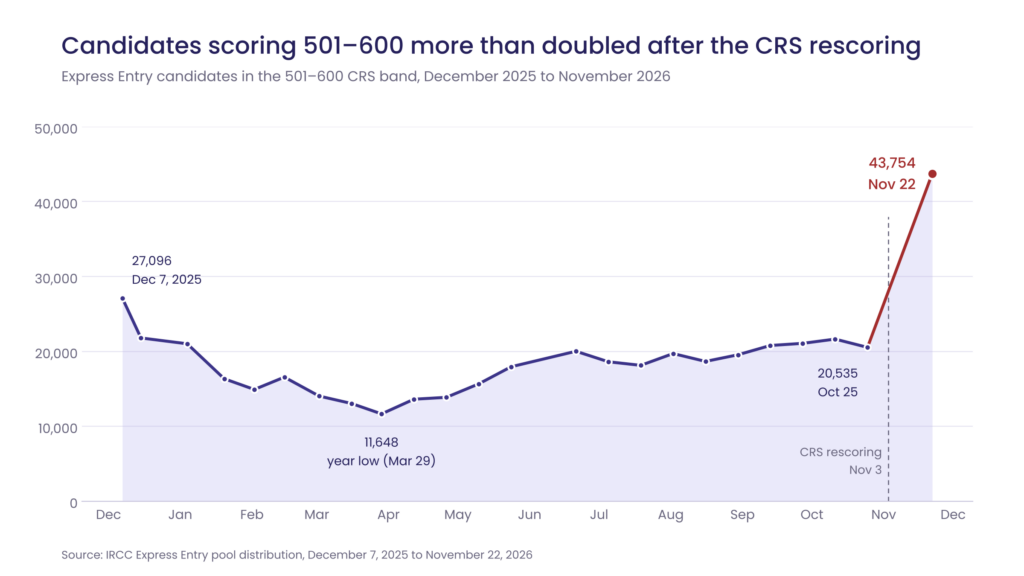
1 in 5 Candidates Now Score Above 501+ in Express Entry Pool, up from 1-in-11
Read more

Express Entry • Nov 23, 2026
IRCC Holds Biggest PNP Express Entry Draw in Two Years, Invites 1,999 Candidates
Read more

Finances • Nov 20, 2026
New CRA Benefit Payments in December 2026: Dates, Eligibility, and Amounts
Read more