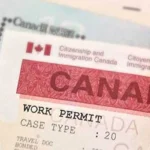
If you’re in Canada on an IEC work permit, you may be wondering whether there’s a realistic IEC to PR pathway.
For some people, International Experience Canada (IEC) is a working holiday and nothing more. For others, it becomes the first step toward staying in Canada longer. There isn’t one single IEC to PR route that works for everyone. Your options depend on your age, nationality, work experience, education, language ability, job, province, family situation, and how much time is left on your permit.
That’s why it helps to understand the pathways you may have early.

IEC to PR pathways in Canada
If you want to stay in Canada permanently after your IEC work permit, your next step is usually to look at which IEC to PR pathways you may qualify for. Some options are based on skilled work experience, while others depend on your province, job offer, family situation, or even whether you may already have a claim to Canadian citizenship.
Express Entry: The Main Route for Skilled Workers
For many seeking to become a Permanent Resident (PR) in Canada, Express Entry is the first pathway they look at. Express Entry is Canada’s system for managing skilled worker immigration applications. Candidates are ranked using the Comprehensive Ranking System (CRS), which awards points for factors like age, education, language ability, and work experience. Moderate to advanced French ability can be a major advantage here. Express Entry draws include French-language category-based draws, which may benefit IEC participants from France or any applicant who is able to demonstrate at least CLB level 7 in French.
Canadian work experience can make a big difference here too. That’s why many IEC holders should aim to complete at least one year of skilled Canadian work experience while in Canada. For Express Entry, only TEER 0, 1, 2, and 3 occupations count as skilled work experience, so not every job in Canada will help you qualify. Doing so will help qualify for the Canadian Experience Class (CEC), one of the main immigration streams managed through Express Entry.
But Express Entry has become far more competitive in recent years. High CRS cutoffs mean many candidates need strong profiles to receive an invitation to apply for permanent residence. For some applicants hoping to go from IEC to PR, Canadian work experience alone isn’t enough. Language scores, education, occupation, and foreign work experience all play an important role too.
Provincial Nominee Programs (PNPs)
Provincial Nominee Programs are another popular option for IEC participants looking to get permanent residence. Each province runs its own immigration streams designed to meet local labour market needs. Some programs target workers already living and working in the province, while others focus on specific industries or occupations.
For IEC workers, a provincial nomination can be valuable because an Express Entry-aligned provincial nomination can add 600 CRS points to an Express Entry profile, dramatically improving the chances of receiving an invitation for PR.
That said, provincial programs change frequently. A pathway that worked well a few years ago may now be far more selective, especially as provinces increasingly prioritize occupations linked to healthcare, skilled trades, construction, transportation, and other high-demand sectors. Still, many continue to successfully transition to permanent residence through PNP streams each year.
Rural and Regional Immigration Programs
Canada also operates several rural and community immigration programs designed to attract workers to smaller communities facing labour shortages and population decline. These include programs such as the Rural Community Immigration Pilot and the Francophone Community Immigration Pilot, which supports French-speaking workers who want to settle in participating communities outside Quebec.
For IEC participants already working in smaller communities, regional programs may become an interesting option, especially if they have local employer support.
Family Sponsorship
Canada’s family sponsorship may be relevant if you have a close family relationship with a Canadian citizen or permanent resident.
For IEC participants, the most common scenario is usually a genuine relationship with a Canadian partner. This may apply if you get married or become common-law partners. In Canada, common-law generally means you have lived together in a marriage-like relationship for at least one year.
In some cases, other eligible family members may also be able to sponsor you, depending on the relationship and the rules that apply.
Unlike Express Entry or PNPs, family sponsorship is based on your relationship to the sponsor rather than your CRS score, occupation, or Canadian work experience. You will need to prove the relationship is genuine, and both the sponsor and the person being sponsored should understand the responsibilities involved.
Quebec Immigration Pathways
IEC participants working in Quebec should also understand that Quebec manages immigration differently from the rest of Canada. Rather than relying primarily on federal Express Entry pathways, Quebec operates its own immigration programs and selection system.
French ability often plays a larger role in Quebec immigration streams, particularly as the province continues emphasizing francophone immigration targets.
For some workers, Quebec offers strong opportunities. For others, immigration through another province may be simpler depending on language ability and career plans.

Our Immigration Consultant
Rebecca Major
Moving2Canada offers transparent Canadian immigration services with advice you can trust. Led by Rebecca Major (RCIC #511564), we deliver professional, regulated, and efficient support with one clear goal: to guide you confidently through your Canadian immigration journey.
Schedule a consult
Before Applying for PR: Check Whether You May Already Be Canadian
Before exploring your IEC to PR options, it may be worth checking whether you have a claim to Canadian citizenship by descent.
Canada changed its citizenship rules on December 15, 2025, when Bill C-3 came into effect. The update removed the previous first-generation limit in many cases, meaning some people born outside Canada may now be recognized as Canadian citizens through a Canadian parent, grandparent, or earlier direct ancestor.
This is not a PR pathway. If you qualify, you may already be a Canadian citizen and would apply for proof of citizenship instead of permanent residence. However, the rules can be complex, especially for older family lines, so it’s worth checking carefully if you have Canadian family history.
If You’re Not Eligible for PR Yet: Extending Your Temporary Stay
Not every IEC participant will be ready to apply for permanent residence by the time their work permit is close to expiring. You may not have enough skilled Canadian work experience yet, your CRS score may not be competitive, or you may not qualify for a provincial or regional pathway to go directly from IEC to PR status.
In that case, your next step may be to look at whether you can extend your temporary stay in Canada while you continue building toward PR. However, extending your stay in Canada is not always the best or only strategy. For some IEC participants, returning home to gain additional skilled foreign work experience can actually strengthen a future Express Entry profile and improve their CRS score.
Depending on your situation, this could involve:
- applying for another work permit,
- switching to student status, if you get accepted to an appropriate Canadian school,
- or exploring options through a Recognized Organization (RO).
The right option depends heavily on your nationality, age, job, employer, and how much time remains on your current permit. It’s important to check the rules early, rather than assuming you’ll be able to stay longer automatically.
One of the biggest mistakes IEC participants make is waiting until their work permit is close to expiring before researching immigration options.
The earlier you understand your options, the easier it becomes to build a realistic IEC to PR strategy before deciding your next move. Because for many IEC participants, the work permit itself is only the beginning of their story in Canada.
About the author

Freya Devlin
She/Her
Content Writer
Having recently moved to Canada, Freya offers a current perspective on the challenges and opportunities of starting fresh. Whether that's the understanding hassle of jargon-filled paperwork, searching for a place to live, or simply discovering those little things that make a place feel like home. She is excited to continue writing content for newcomers to Canada that is clear and helpful.
Read more about Freya Devlin
Citation
Devlin, Freya.
"IEC to PR in Canada: What Are Your Options After Your Work Permit?."
Moving2Canada.
Last modified May 22, 2026.
https://moving2canada.com/features/iec-to-pr-canada-may-22-2026/.
Copy for Citation
Featured Stories

Immigration • Oct 16, 2026
Will High-Wage Occupation Points Impact Category-Based Express Entry Draws?
Read more

Immigration • Oct 16, 2026
Could the October 16 CRS Update Push Express Entry Draw Scores Above 530?
Read more

IEC • Oct 16, 2026
Working Holiday Canada News, IEC Pools and Invitations
Read more
Immigration • Oct 16, 2026
How to Update Your Express Entry Profile for Canada’s New Job Offer Rules
Read more