This article was updated more than 6 months ago. Some information may be outdated.
If you're trying to figure out which province in Canada is the most affordable, the data points to Quebec. But for newcomers, “affordability” means more than just the cost of basic goods. As a newcomer, you’ll also need to factor in income, taxes, and your household’s needs into your budget.
According to CBC’s analysis of affordability across Canada, in 2024, basic necessities were the least expensive in Quebec. A household there needed about $47,133 to cover a modest standard of living in 2024. British Columbia emerged as the most expensive province, with families needing $56,059 to live modestly. That difference works out to almost $750 a month.
Other provinces lie somewhere between these two numbers. In Ontario, you would need $54,981 per year, while Albertan households would need $55,041 per year.
Living in the territories is significantly more expensive, in part due to the added cost of transporting goods. A modest lifestyle in Nunavut would cost you $107,512 per year, which is almost twice as much as you’d need in B.C.
But these numbers alone don’t tell you the complete story.
Affordability depends on more than the cost of basic goods. It depends on how much you earn, tax rates, how many people are in your household, and what your day-to-day life requires.

What Newcomers Spend the Most On
Housing Costs
Housing is the single biggest expense for most newcomers. According to the Rentals.ca Rent Report for March 2026, the national rent-to-income ratio is around 29%, with the national average rent being $2,030.
In reality, rent varies significantly depending on where you settle and the type or size of the home. In February, average asking rents across all property types by province were:
- British Columbia: $2,375/month
- Ontario: $2,243/month
- Atlantic Canada: $2,190/month
- Quebec: $1,916/month
- Alberta: $1,750/month
- Manitoba: $1,660/month
- Saskatchewan: $1,464/month
Based on this data, Saskatchewan emerges as the most affordable province to rent in. In contrast, average rental prices in British Columbia are $911 higher. That’s a difference of almost $11,000 in a year.
But average provincial rent doesn’t give you the full picture. Even within a province, the difference in housing costs is significant. Average rent in North Vancouver is $2,969, compared to $2,271 in Victoria—a $698 per month difference between two major cities in the same province.
For newcomers planning to buy a home in the next few years, home prices follow a similar pattern. CBC’s report listed average home prices in December 2025 ranging from $1,138,200 in Vancouver and $962,300 in Toronto, down to $418,500 in Edmonton, and $339,700 in Regina.
Most newcomers rent first, and that is a reasonable approach. If home ownership is an important goal for you, accessibility of ownership in the long-term is worth factoring into your provincial decision.
Groceries and Food
Food is one of your most consistent monthly expenses in Canada. By the end of 2025, groceries were projected to account for between 16 and 19 per cent of Canadians’ overall spending, according to CBC’s analysis.
For a single adult, the 2025 Canada Food Price Report estimates monthly grocery costs at between $350 and $400. For a family of four, that figure rises to roughly $1,402 a month.
Food costs are more consistent across Canada than housing, but regional differences do exist. Grocery costs tend to be higher in regions where wages are higher, simply because higher local incomes allow retailers to charge more. Atlantic Canada and the territories also have higher grocery prices due to transportation costs and distance from major food supply chains.
All things considered, differences in grocery prices alone are not dramatic enough to drive a provincial decision on their own. Practical grocery savings strategies like buying in bulk, using discount chains, shopping sales, and making use of loyalty programs can meaningfully reduce your expenses in year one.
Utilities and Other Monthly Expenses
Utilities cover electricity, natural gas, and water, and the costs vary depending on where you live and what type of home you are in. If you are renting an apartment or condo, some of these costs may already be included in your rent.
Electricity (or hydro) rates vary significantly by province. According to Statistics Canada, the average household electricity consumption in 2021 was 39.1 gigajoules/year. At current rates, that works out to roughly $200 a month in Calgary, $114 in Vancouver, and $118 in Toronto. Quebec has the lowest electricity rates in Canada, with the monthly average bill in Montreal being around $75.
In some provinces, natural gas is used for home heating and is a separate utility expense. The amount you pay depends on the size of your home and how cold the season runs.
Income Tax and Sales Tax
Of all the provinces, Quebec has the highest provincial income tax rate at 14% on the first $54,345 of taxable income. Ontario’s starts much lower at 5.05% on the first $53,891. Alberta’s rate starts at 8%, but the province has the highest basic personal amount in the country, which reduces the taxable income for Albertans. Federal income tax applies on top of provincial rates regardless of where you live.
Quebec offers childcare subsidies and family benefits that can partially offset its higher tax rates, though most provinces now subsidise childcare to some degree.
Income tax is not the only tax affecting your budget. Sales tax on everyday purchases varies significantly by province — from 5% in Alberta to nearly 15% in Quebec and 13% in Ontario. For a newcomer buying furniture, a car, or household essentials in their first year, that difference adds up.
What Else Affects Affordability
Your Family Income
What you earn strongly impacts what you can afford. CBC data showed that Alberta has the highest average disposable income per household at $117,314. On the other end of the spectrum, households in Quebec only had an average disposable income of $81,878.
Considering the average expense amounts from CBC’s data, an average household in Alberta would save as much as $62,273 per year. In comparison, a family in Quebec would only save $34,745, despite the much lower cost of living. The caveat here is that this only accounts for basic expenses and may not hold true in practice.
For newcomers, the local unemployment rate, median wages, and how competitive the job market is for your occupation are all relevant questions to ask. A province with lower costs and lower wages is not automatically a better financial choice if finding work there takes significantly longer.
Your Family Size
A single person and a family of four are budgeting for fundamentally different lives. Family size affects the size of home you need, childcare costs, and day-to-day expenses like food and clothing. Thesecosts also vary significantly by province and city.
Whether you Need a Car
In Toronto and Vancouver, many newcomers can get by without a car. Both cities have extensive transit networks and monthly transit passes cost around $111 to $156.
In most other parts of Canada, a vehicle is a practical necessity. Auto insurance alone varies significantly by province. Average annual car insurance premiums in 2024, according to the Insurance Bureau of Canada (via CBC) were:
- Ontario: $2,038
- Alberta: $1,759
- British Columbia: $1,500
- Quebec: $1,165
- PEI: $1,043
Ontario drivers pay nearly double what drivers in PEI pay. That is close to $1,000 in annual variance depending on province. It might even be more if you choose a city with higher accident or car theft rates.
Gas, maintenance, parking, and financing payments are other costs of car ownership. If you settle in a city or neighbourhood without reliable transit, these costs need to be factored into your budget.
Is Quebec Actually the Most Affordable Province for Newcomers?
Quebec has the lowest cost of basic necessities of any province, including rent and electricity. But low costs do not automatically translate into the best financial outcome for newcomers.
Quebec also has the highest provincial income tax rate and a combined sales tax of 15%. The CBC data shows the gap clearly: after covering basic expenses, the average Alberta household has roughly $62,200 left over annually, compared to around $34,700 in Quebec.
For a single newcomer without children, the benefits that offset Quebec’s higher taxes are limited. But for families, childcare subsidies and family benefits can reduce the net cost of living, making Quebec more competitive.
As of February 2026, Quebec had an unemployment rate of 5.9%, which is lower than the national average. The median wage in the province is lower than Ontario, British Columbia, and Alberta, but wages will vary significantly based on your occupation.
Affordability will depend on all these factors. That said, for non-Francophone newcomers, Quebec may not be a realistic option at all.
Do Your Own Math Before You Decide
Keep in mind that affordability is not just about cost of living. It’s about employment opportunities, wages, taxes, and savings as well. Running these numbers before you arrive can be the difference between a realistic budget from an optimistic one.
There is no universally affordable province, and choosing one is only half the decision. Where you settle within that province can shift your budget just as much as the province itself. Halifax averages $2,252 in monthly rent despite Nova Scotia’s reputation for affordability. Sudbury, a mid-sized Ontario city, averages $2,269 — more than Ottawa, the country’s capital. Smaller does not automatically mean cheaper.
The most affordable cities tend to be those with less competition for housing and more supply: Quebec City, Edmonton, Moncton, and St. John’s.
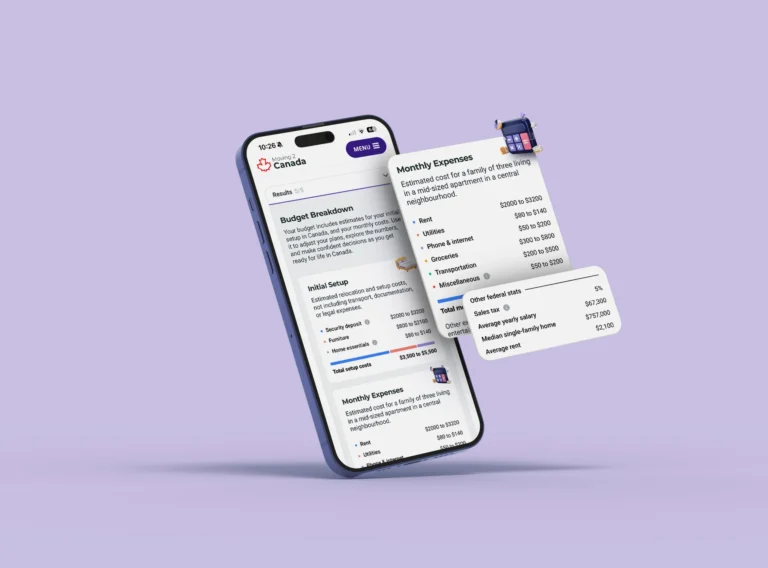
The province and city you choose is one of the most consequential financial decisions of your move. Use the Moving2Canada budget calculator to estimate your monthly expenses, based on the location you’re targeting.
About the author

Sugandha Mahajan
She/Her
Content Marketer
Born and raised in New Delhi, India, Sugandha moved to Canada as a permanent resident in early 2020, just weeks before the pandemic shut everything down. She has first-hand experience with many common newcomer challenges, including navigating the Express Entry system, finding a job without Canadian experience, and figuring out small talk. To deepen her understanding of the field, she is currently pursuing a Graduate Diploma in Immigration & Citizenship Law at Queen’s University.
Read more about Sugandha Mahajan
Citation
Mahajan, Sugandha.
"Quebec Is Canada’s Cheapest Province. But Is It Best for Your Newcomer Budget?."
Moving2Canada.
Last modified April 2, 2026.
https://moving2canada.com/features/quebec-is-the-cheapest-province-but-is-it-best-for-newcomer-budget/.
Copy for Citation
Featured Stories

Oct 19, 2026
Newfoundland and Labrador PNP Draws 2026
Read more

Immigration • Oct 16, 2026
Will High-Wage Occupation Points Impact Category-Based Express Entry Draws?
Read more

Immigration • Oct 16, 2026
Could the October 16 CRS Update Push Express Entry Draw Scores Above 530?
Read more

IEC • Oct 16, 2026
Working Holiday Canada News, IEC Pools and Invitations
Read more