Who among us hasn’t dreamt of turning a hobby into a business? But that's not what's driving Canadians to start side hustles.
About 31% of Canadians currently have a side hustle, according to Omnisend’s 2026 Side Hustle Economy Report, which surveyed over 1,000 Canadian adults in March 2026. Roughly half of those were started in the past year.
Free Tool
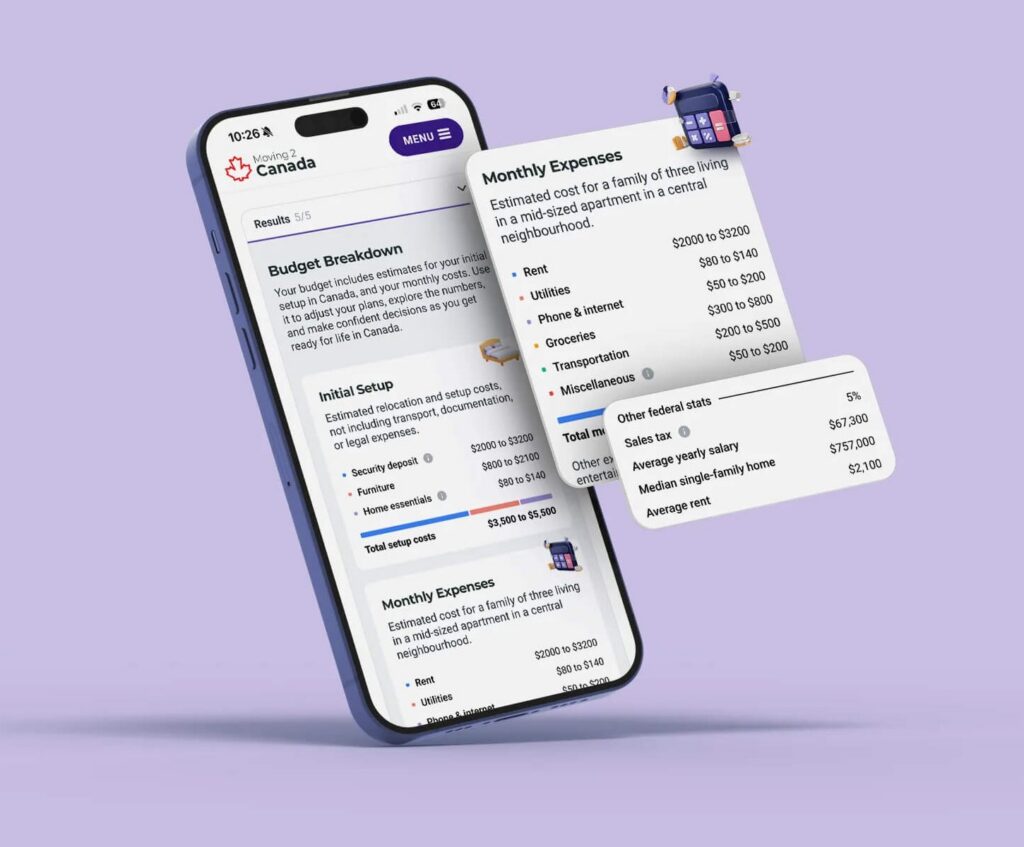
What's the real cost of living in Canada? Find out by city
Rent, groceries, transit, and more! See a full cost breakdown for your top Canadian cities before you arrive. Built for newcomers planning their move.
Try the free cost of living calculator
Why Are Canadians Starting Their Own Side Hustles?
Not all these side hustles started as passion projects. Around 85 percent of Canadian respondents said they took on extra work for financial reasons.
57.4 percent stated they needed more money for bills and essentials. 8.9 percent needed funds to pay off debt. 6.1 percent said their regular job doesn’t pay enough, and another 4.7 percent used their side hustle to supplement reduced income or to counter job insecurity. 7.6 percent used the extra funds to save for a specific goal (a home, vacation, etc.).
Only around 8 to 10 percent across all four countries surveyed — US, Canada, Australia, and the UK — said they were pursuing a passion or trying to build a business.
Other reasons stated include becoming independent, building skills for the future, or growing the side gig into a full-time business eventually.
The data shows that the growth of these side hustles isn’t an entrepreneurial boom, but a response to rising cost-of-living and an unstable economy. About half of all Canadians surveyed stated theystarted their side hustles in the last year. That timing aligns with a period of elevated housing costs, higher interest rates, and persistent grocery inflation.
Most People Are Selling Things Online
The most popular form of extra income in Canada is ecommerce. 48 percent of Canadian side hustlers are selling things online or reselling products. 53 percent of online sellers used Facebook Marketplace for e-commerce. Amazon (34.3 percent) and eBay (27.5 percent) came in second and third. In comparison, eBay leads the pack in both the US and UK. Vinted, which doesn’t have a direct equivalent in Canada, is also popular in the UK.
The most common products being sold by side hustlers in Canada are vintage or second-hand items (27 percent), handmade or custom goods (23 percent), and digital products (10 percent).
Freelancing (17.1 percent), content creation (14.7 percent), and food delivery (14.7 percent) are also common, but none come close to ecommerce in participation.
Some new-age services are growing in popularity too. In Canada, 6.1 percent of side hustlers offer AI-related services, such as prompt consulting, and AI content creation. 3.4 percent work as virtual assistants.
Low Time Commitment, Modest Earnings, High Satisfaction
91 percent of Canadian side hustlers spend fewer than 20 hours a week on their extra income, with 5 to 9 hours being the most common range. Most people fit their side gig around a primary job.
More than half of Canadian side hustlers (53 percent) earn up to US $500 a month after taxes and expenses. About 25 percent bring in $1,000 or more.
In comparison, 67 percent of Brits and 51 percent of Americans earn up to US $500 a month from their side hustle. Australians are the clear outlier: 40 percent of Australian side hustlers earn US $1,000 or more per month, compared to 25 percent of Canadians and just 16 percent of Brits.
At the individual level, these numbers may not seem like much. But combined, side hustle income in Canada adds up to roughly CA $9.9 billion per month. That’s a substantial portion of economic activity happening outside traditional employment.
Despite modest individual earnings, about 70 percent of Canadian side hustlers say they’re either somewhat or very satisfied with what they’re making. Four in five say they plan to continue their side hustle.
Side Hustle Income is Taxable
Side hustle income earned in Canada is taxable income, whether you’re a permanent resident or on a work or study permit. There’s no minimum amount below which you can ignore it.
All self-employment income must be reported to the Canada Revenue Agency (CRA), no matter the amount.
Most casual side hustlers (selling on Facebook Marketplace, freelancing, doing deliveries) operate as sole proprietors without formally registering a business. If that’s you, your side hustle income is reported on Form T2125 (Statement of Business or Professional Activities), filed as part of your T1 personal return. It’s taxed at your regular marginal rate, on top of any employment income you’realready earning.
As a sole proprietor, you’re also responsible for both the employer and employee portions of CPP contributions — 11.9 percent of net self-employment income in 2026. Because nothing is withheld at source, the bill arrives all at once when you file your return. Setting aside around 25 to 30 percent of your net earnings throughout the year helps avoid that surprise.
If your side hustle is incorporated, the tax and CPP rules are different. How you pay yourself (salary versus dividends) affects both your tax rate and your CPP obligations, and your filing deadlines may be monthly or quarterly rather than annual. A tax professional can help you structure this correctly.
Platforms like Etsy, Airbnb, eBay, and SkipTheDishes are now required to report your earnings directly to the CRA, under rules that came into effect in 2024. The agency likely already has a record of what you’ve earned on these platforms before you file.
On the positive side, legitimate business expenses reduce your taxable income. Supplies, shipping costs, platform fees, and a portion of your home office or phone costs can all be deductible. Keep receipts, invoices, and logs for at least six years, as the CRA can request a review during that period.
Additional Considerations If You’re on a Work or Study Permit
If you’re on a temporary work or study permit, your authorization to work (that includes side hustles) in Canada is defined by your permit conditions.
If you hold an open work permit, you generally have more flexibility to work for any employer, which typically extends to self-employment income. If you hold a closed, employer-specific work permit, you can only work for your authorized employer, and any other work is not permitted.
IRCC defines “work” for temporary residents as any activity for pay or commission, which covers most income-generating side activities. If you’re unsure what your permit allows, check with a reputed immigration consultant before you start a side hustle.

Our Immigration Consultant
Rebecca Major
Moving2Canada offers transparent Canadian immigration services with advice you can trust. Led by Rebecca Major (RCIC #511564), we deliver professional, regulated, and efficient support with one clear goal: to guide you confidently through your Canadian immigration journey.
Schedule a consult
About the author

Sugandha Mahajan
She/Her
Content Marketer
Born and raised in New Delhi, India, Sugandha moved to Canada as a permanent resident in early 2020, just weeks before the pandemic shut everything down. She has first-hand experience with many common newcomer challenges, including navigating the Express Entry system, finding a job without Canadian experience, and figuring out small talk. To deepen her understanding of the field, she is currently pursuing a Graduate Diploma in Immigration & Citizenship Law at Queen’s University.
Read more about Sugandha Mahajan
Citation
Mahajan, Sugandha.
"Nearly One in Three Canadians Has a Side Hustle: What This Says About Canada’s Economy."
Moving2Canada.
Last modified May 27, 2026.
https://moving2canada.com/features/nearly-1-in-3-canadians-has-a-side-hustle-27-may-2026/.
Copy for Citation
Featured Stories

Finances • Sep 28, 2026
Canada Groceries and Essentials Benefit (CGEB): 2026 Payment Dates & Eligibility
Read more

Finances • Sep 28, 2026
The Canada Child Benefit: CCB Payment Dates for 2026
Read more

Express Entry • Sep 28, 2026
IRCC Invites 733 PNP Candidates in Sept. 28 Express Entry Draw
Read more

Living • Sep 25, 2026
CRA Benefit Payments in October 2026: What Newcomers Could Get
Read more